


Guides/101
Updated on Jul. 6th 2026
Things You Should Know Before Buying A 3D Scanner - A Practical Classification of 3D Scanners
Learn how 3D scanners are classified by light source, operating mode, and accuracy. Compare laser, LED, and VCSEL technologies to choose the best 3D scanner for your application.
The core objective of 3D scanning technology is to digitize real-world geometric information into 3D models. Although 3D scanning devices on the market vary greatly in form, they can be systematically classified based on several key dimensions:
-
Light source
-
Operating mode
-
Accuracy
These dimensions are not mutually exclusive; rather, they describe different layers of system design that together define how a scanner performs in real-world applications.
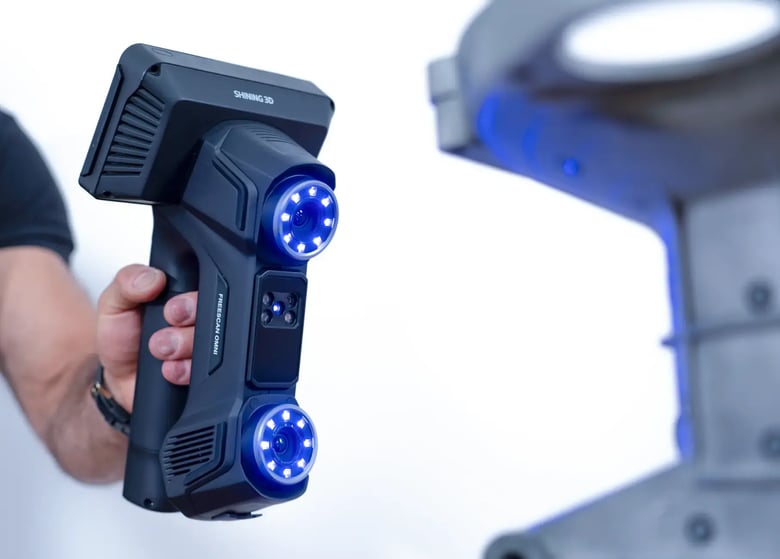 SHINING 3D FreeScan Omni handheld 3D scanner: blue laser light, accuracy 0.02 mm
1. Classification by Light Source
One of the most fundamental ways to classify a 3D scanner is by the type of light it uses to capture an object's geometry.
Different light sources behave differently when they interact with real-world objects. Some can travel long distances with little loss of accuracy, while others are better at capturing fine details at close range.
Today, the most common light sources used in 3D scanning are laser, LED projection, and VCSEL infrared light.
1.1 Laser
Laser is one of the oldest and most widely used light sources in professional 3D scanning. Unlike ordinary light, a laser beam remains highly concentrated over long distances, allowing scanners to capture objects from several meters away.
This makes laser-based scanners particularly suitable for applications where large objects or wide areas need to be measured.
Typical advantages of laser light include:
-
Excellent performance over long working distances
-
Reliable operation in outdoor environments
-
Stable measurements across large scanning volumes
In general, laser scanners are the preferred choice when coverage, distance, and measurement stability are more important than microscopic surface detail.
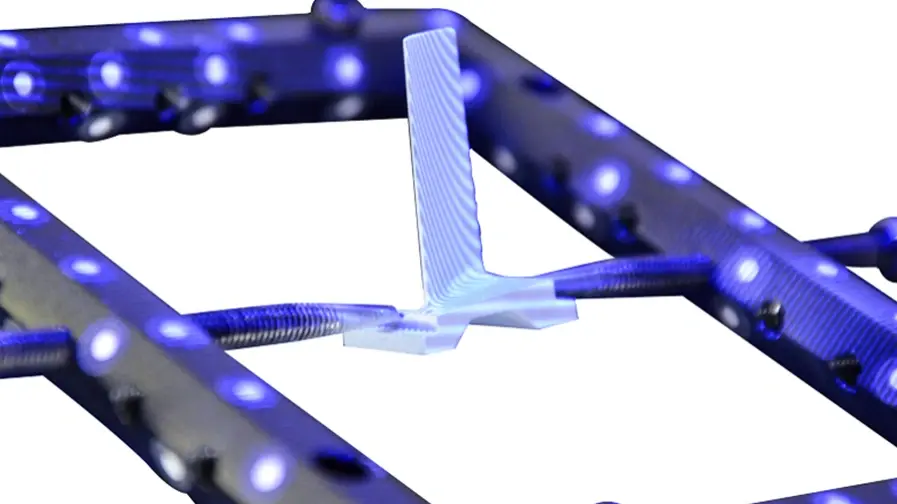
Blue laser light
1.2 LED Projection
LED projection is one of the most popular light sources for handheld and desktop 3D scanners.
Instead of concentrating light into a narrow beam, these systems project light over the entire surface of an object. This allows the scanner to capture a large amount of geometric information in a single frame, making it highly effective for recording small details.
LED-based scanners typically offer:
-
High surface detail and point density
-
Fast data capture for small and medium-sized objects
-
Excellent accuracy at short working distances
Overall, LED projection is best suited for applications where high-resolution surface capture is the primary goal.
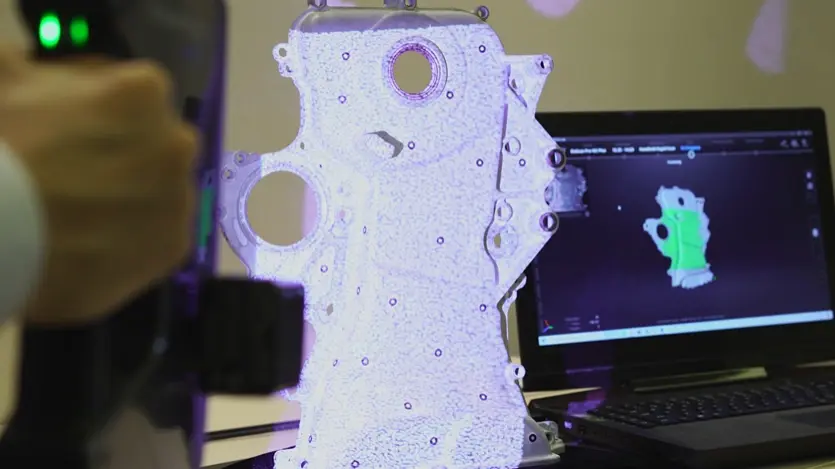
Blue LED light
1.3 VCSEL Infrared Light
VCSEL (Vertical-Cavity Surface-Emitting Laser) is a newer type of light source that has become increasingly common in consumer electronics.
If you've used facial recognition on a smartphone or experimented with mobile 3D scanning, you've likely already used a VCSEL-based system.
Compared with traditional industrial laser systems, VCSEL modules are much smaller, consume less power, and can be manufactured at lower cost. These advantages make them ideal for compact devices such as smartphones, tablets, AR/VR headsets, and lightweight handheld scanners.
While VCSEL technology offers excellent portability, it is generally optimized for convenience rather than maximum measurement accuracy.
Typical characteristics include:
-
Low power consumption
-
Fast real-time depth sensing
-
Short operating range
As a result, VCSEL is commonly used for applications such as AR/VR, spatial awareness, and consumer-level 3D scanning and printing, where ease of use and real-time performance are often more important than engineering-grade precision.
 Invisible infrared Light
2. Classification by Operational Mode
Besides the light source, another important way to classify a 3D scanner is by how it is used during scanning.
Some scanners are designed to be moved freely by the user, while others require the object to remain in a fixed position. There are also systems that use external tracking devices to monitor the scanner's movement with extremely high precision.
The operational mode affects much more than just the scanning experience. It influences portability, workflow, object size, achievable accuracy, and the types of projects a scanner is best suited for.
The three most common operational modes are handheld, stationary/fixed, and tracking-based systems.
2.1 Handheld Scanners
Handheld scanners are the most versatile type of 3D scanner available today. As the name suggests, the operator simply holds the scanner and moves it around the object, capturing data from different angles until the entire surface has been scanned.
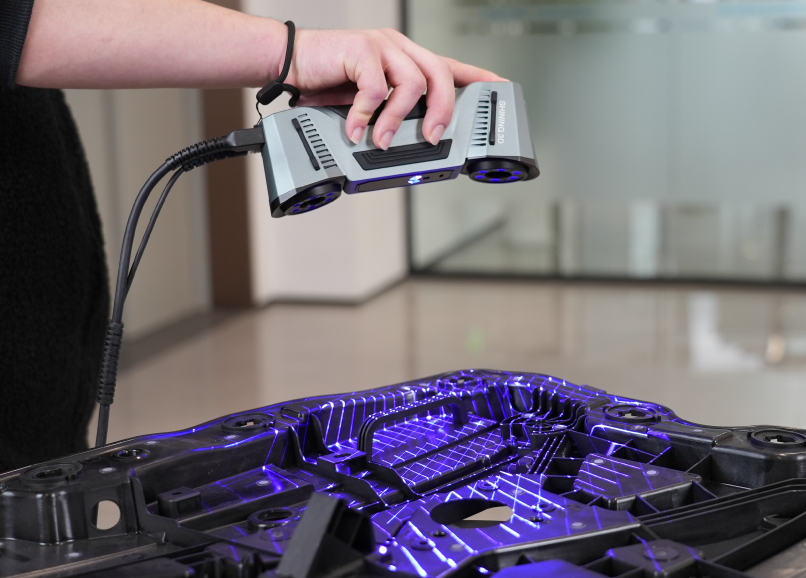 FreeScan Combo handheld 3D scanner
This freedom of movement makes handheld scanners an excellent choice for objects that are too large, too heavy, or simply impossible to place on a scanning table, easy operation in workshops, factories, or outdoor environments.
The trade-off is that scan quality depends more on the operator. Moving too quickly, losing track of the object, or missing certain areas can lead to incomplete data or require additional rescanning. Modern scanners have become much better at automatically tracking their position, but a smooth and consistent scanning motion still produces the best results.
Today, handheld scanners are widely used for scanning medium to large sized objects on-site where portability is essential.
2.2 Stationary/Fixed Scanners
Unlike handheld systems, stationary/fixed scanners perform the scan while both the scanner and the object remain in fixed positions.
For desktop scanners, the object is usually placed on a turntable that automatically rotates during scanning. This allows the scanner to capture the object from multiple angles without requiring the user to move the device.
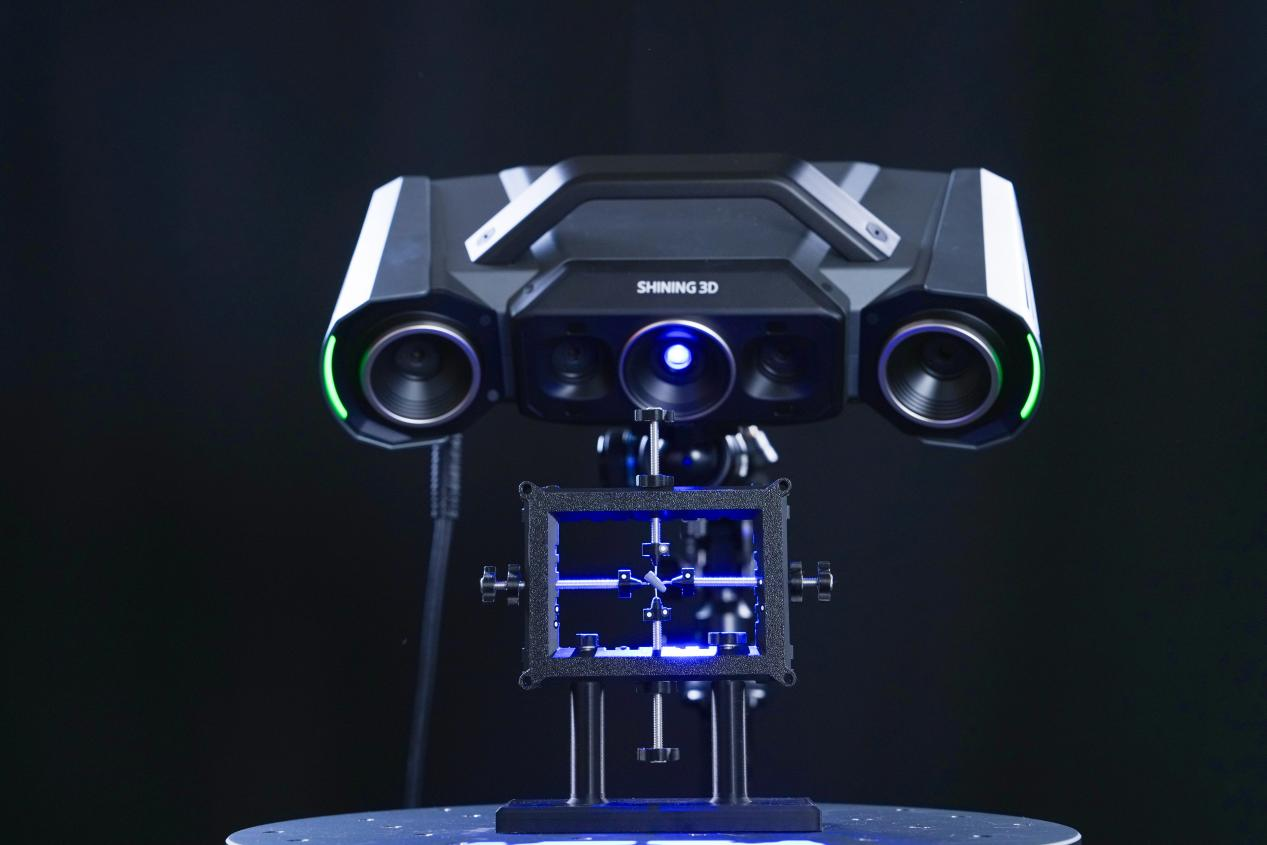 OptimScan Q12 HD fixed 3D scanner
Because the scanning environment is carefully controlled, stationary scanners are able to produce highly consistent results with minimal user intervention. Their main advantages include:
-
Excellent repeatability between scans
-
Stable scanning conditions that reduce user error
-
High-quality models with fine surface details
The downside is that the object must fit inside the scanner's working volume. Large products, installed equipment, or objects that cannot be moved are generally not suitable for this type of scanner.
Stationary/fixed scanners are therefore most commonly used for small and medium-sized objects, such as mechanical parts and models, jewelry, electronic products.
2.3 Tracking-Based Scanners
Tracking-based scanners combine a handheld scanner with an external tracking system that continuously monitors the scanner's position during operation. This helps maintain accuracy even when scanning very large objects.
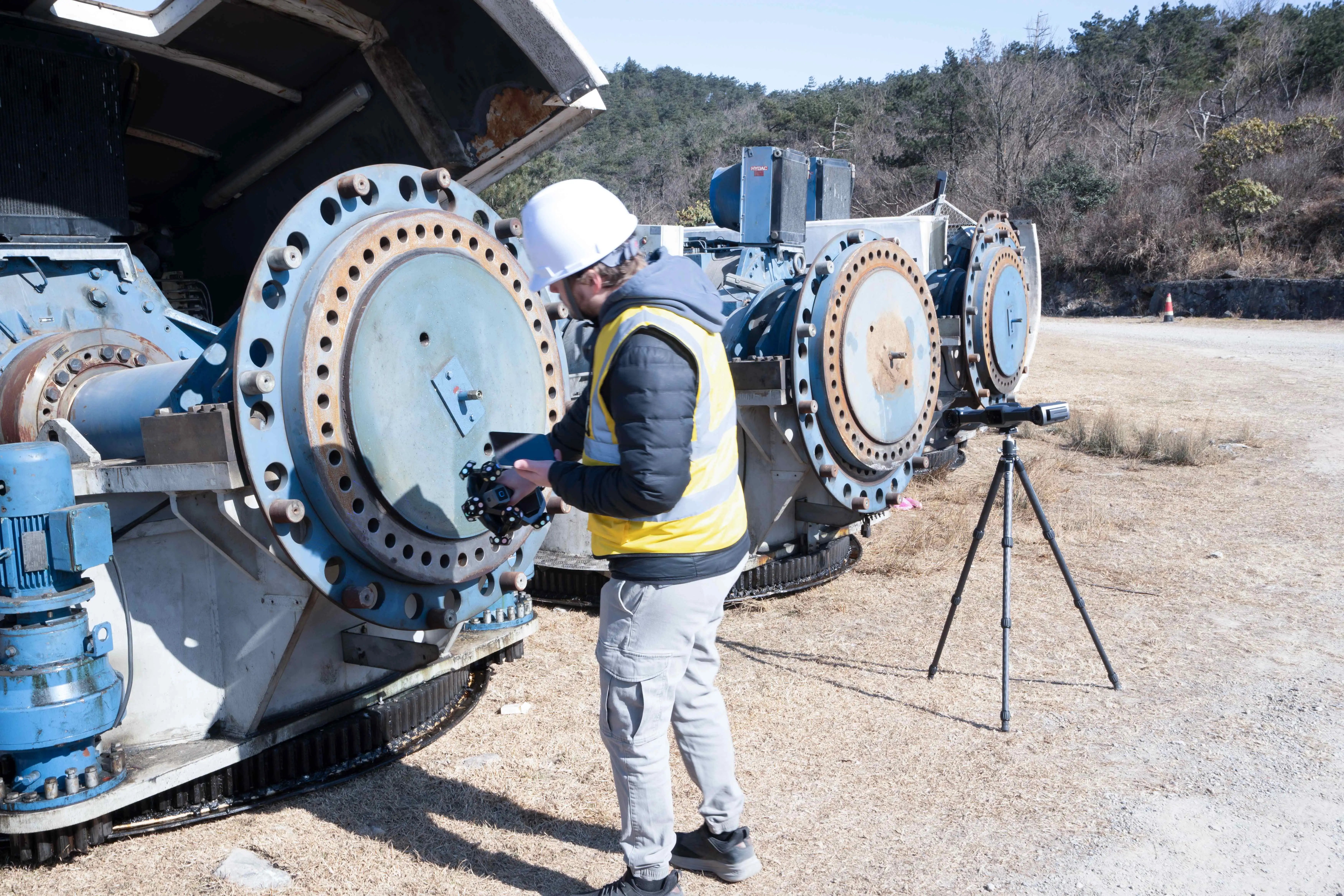 FreeScan Trak Nova dynamic tracking and scanning system
Tracking systems offer several important advantages:
-
Reduce accumulated positioning errors during long scans
-
Improve accuracy over large scanning volumes
-
Eliminate or reduce the need for physical markers on the object
These benefits make tracking-based systems especially attractive for industrial inspection and large-scale measurement.
3. Classification by Accuracy
Accuracy is one of the first specifications people look at when comparing 3D scanners. Generally, the required level of accuracy depends on the application.
If you're scanning a person to create a digital avatar, an error of 1 millimeter is unlikely to be noticeable. However, if you're inspecting a precision-machined component, even an error of 0.01 mm could be unacceptable.
Rather than thinking of accuracy as "higher is always better," it is more useful to think of it as choosing the right level of precision for the job.
3D scanners available on the market can be grouped into three accuracy tiers.
3.1 Metrology-Grade Accuracy (In SHINING 3D product portfolio: 0.004 ~ 0.025 mm)
Metrology-grade scanners represent the highest level of precision available in commercial 3D scanning. Metrology scanners are built to perform accurate measurements that can support manufacturing and quality control. In these applications, the scan is often used to verify whether a manufactured part matches its original CAD model within a specified tolerance.
Typical applications include:
-
Precision quality inspection
-
Aerospace manufacturing
-
Automotive production
-
Mold and tool verification
-
High-end industrial measurement
It's worth noting that metrology-grade accuracy is often backed by standardized certification. Many manufacturers validate their systems according to standards such as VDI/VDE 2634 or ISO 10360, with testing performed in controlled accuracy laboratory. This gives users greater confidence that the published accuracy is both repeatable and independently verified.
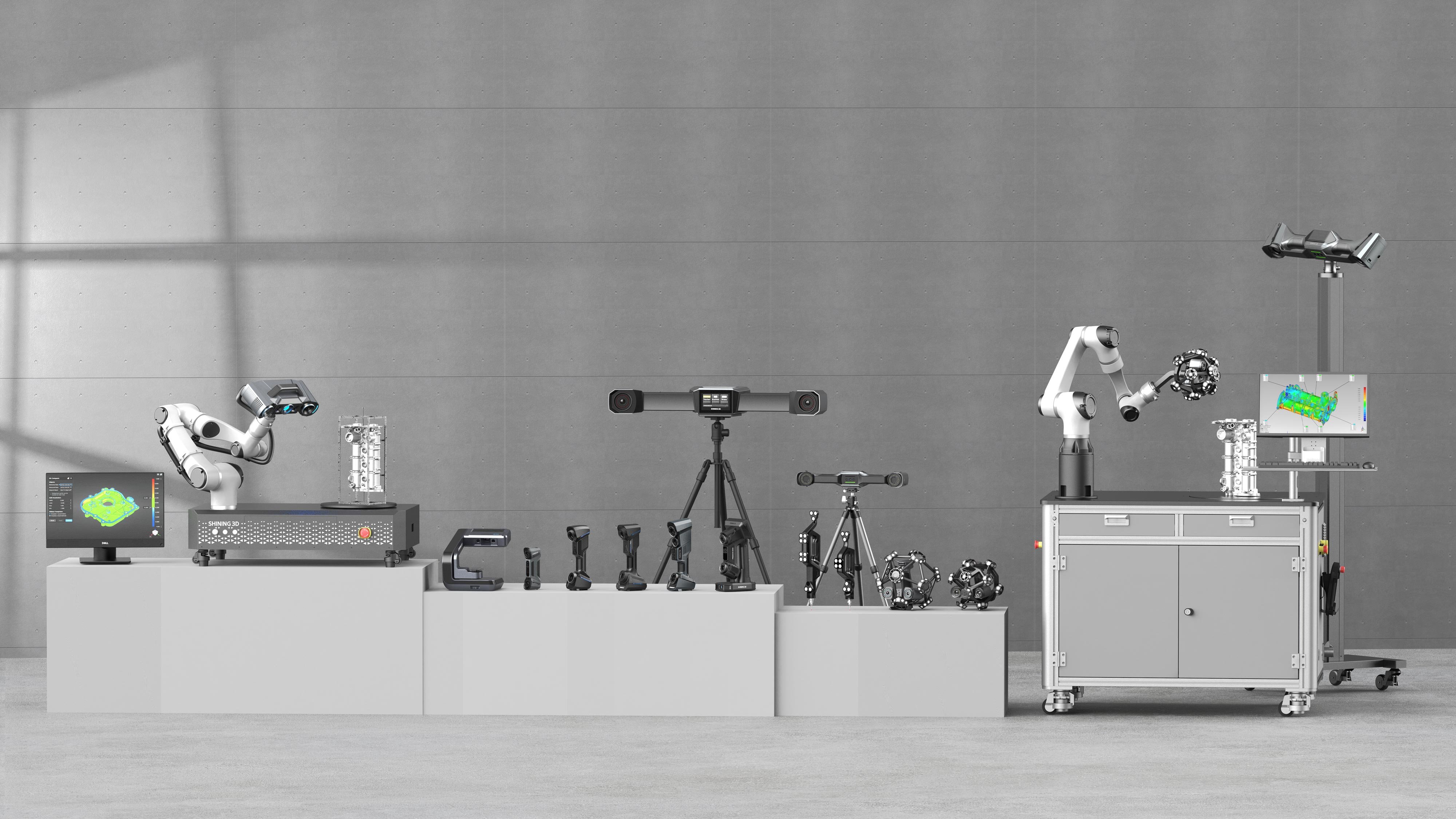 SHINING 3D metrology products
3.2 Standard Accuracy (In SHINING 3D product portfolio: 0.04 ~ 0.1 mm)
Scanners with standard accuracy are designed for engineering tasks where measurements begin to matter.
At this level, the scanner is capable of capturing much finer geometric details, making the resulting models suitable for CAD reconstruction, reverse engineering, and product development.
For many companies, this category offers the best balance between accuracy and cost, making it the most common choice for professional workflows.
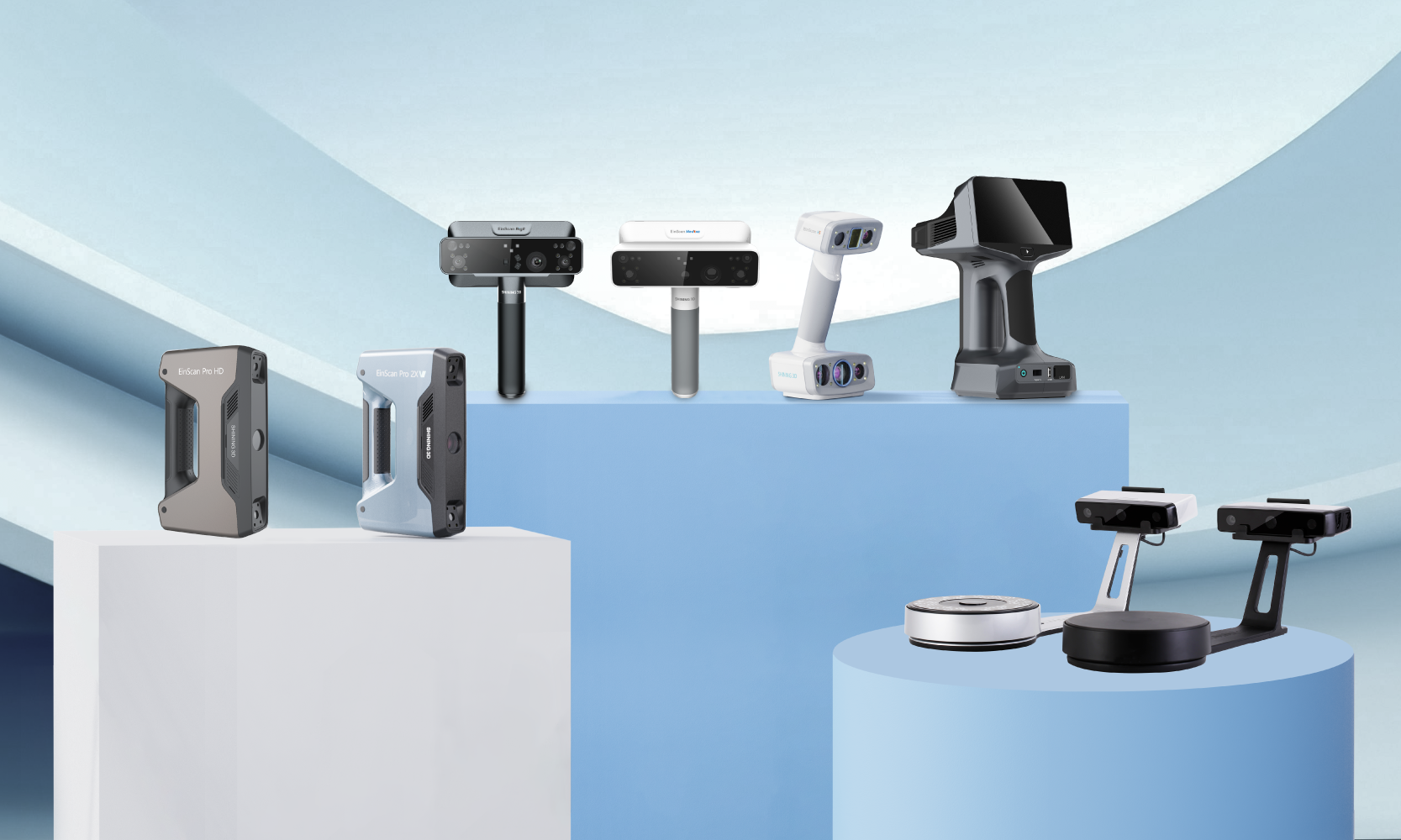 SHINING 3D EinScan series with standard accuracy
3.3 Others (In SHINING 3D product portfolio: ≥ 0.1 mm or unspecified)
Scanners in this situation are usually designed for applications where the overall shape of an object is more important than its exact dimensions.
These systems are typically capable of capturing objects with sufficient detail for visualization, digital archiving, basic 3D printing, and many creative applications. For example, if you're scanning a statue, a piece of furniture, or a person, a small dimensional error is usually difficult to notice in the final model.
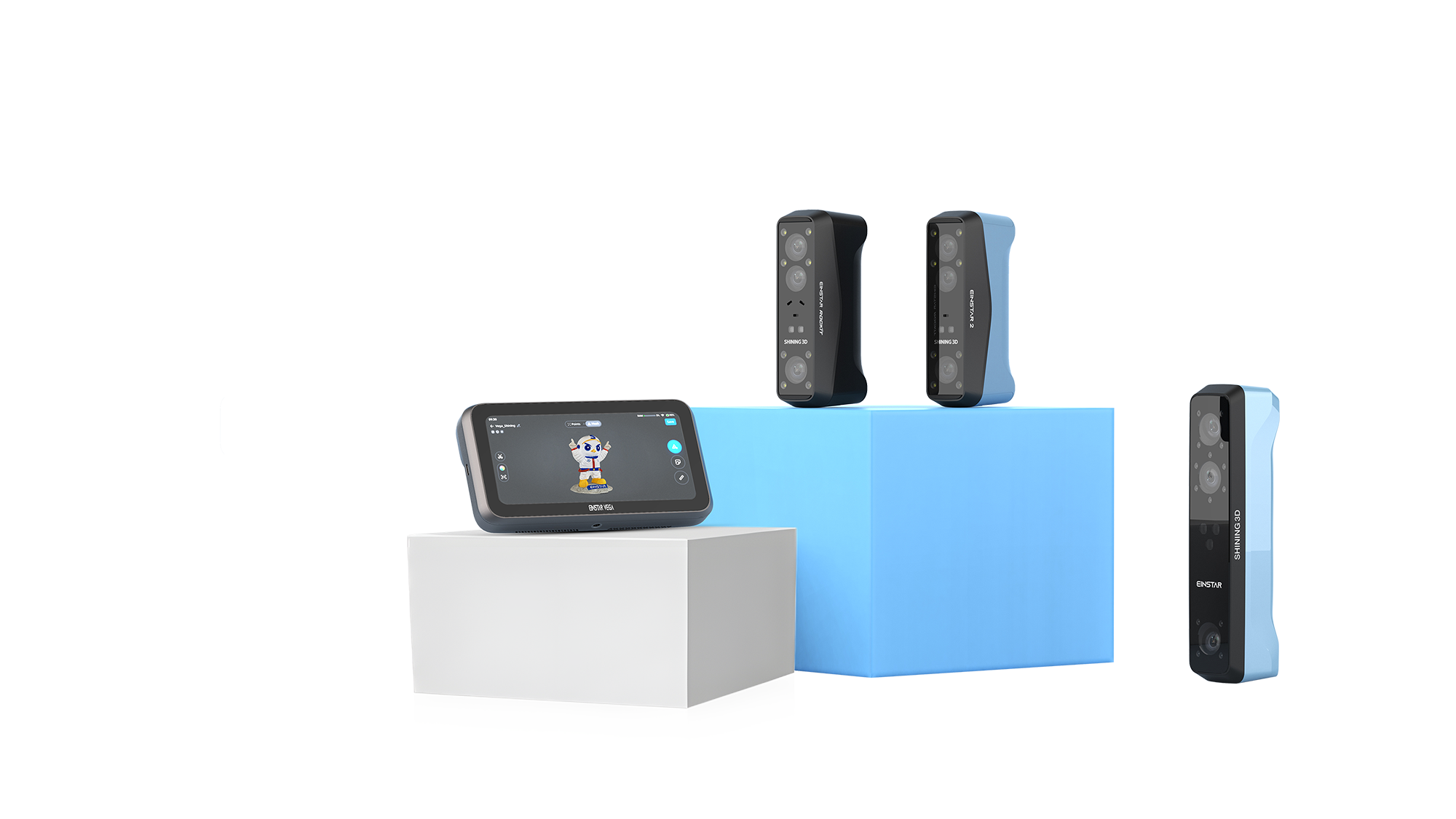 SHINING 3D EINSTAR series
Typical applications include:
-
3D visualization
-
Digital content creation
-
Education
-
Hobbyist 3D printing
-
Basic object digitization
The biggest advantages of this category are affordability, and provide all the precision needed for everyday scanning tasks.
Conclusion
Although today's 3D scanners come in many different forms, most of them can be understood through three simple questions:
-
What light source does the scanner use?
-
How is the scanner operated?
-
What level of accuracy does the application require?
It's also worth remembering that these classifications are not independent. A scanner is typically defined by a combination of all three. For example, a handheld scanner may use LED projection for high-detail scanning, while a tracking-based system may combine laser technology with metrology-grade accuracy for industrial inspection.
As 3D scanning technology continues to evolve, new products will offer higher speeds, better portability, and smarter software. However, these three fundamental classifications remain a useful framework for understanding the technology behind any 3D scanner—whether you're exploring the field for the first time or comparing the latest products on the market.
Understanding how 3D scanners are classified is the first step toward choosing the right solution. Once you're familiar with the differences in light source, operational mode, and accuracy level, the next question becomes: Which scanner is right for your application?
Read our guide on How to Choose the Best 3D Scanner for Your Application and Industry to learn how these technologies translate into real-world use cases.
Share on Social Media


