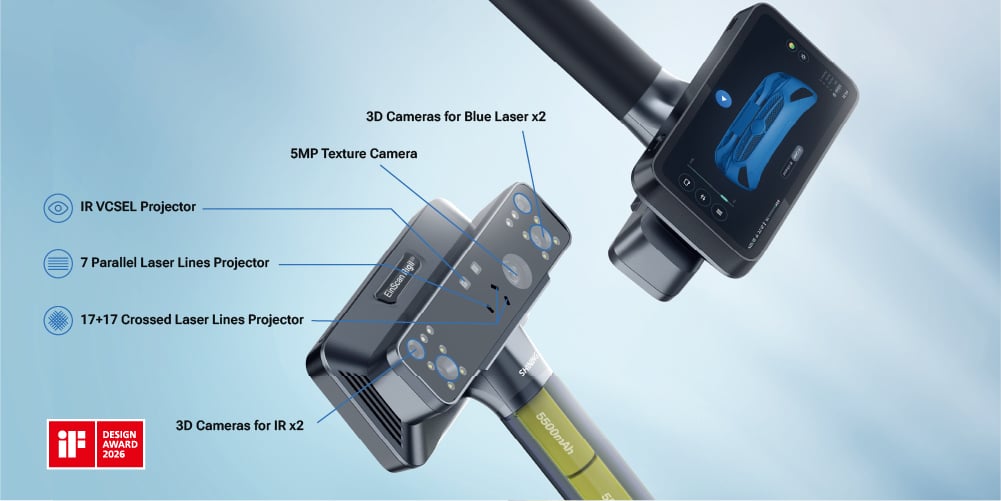
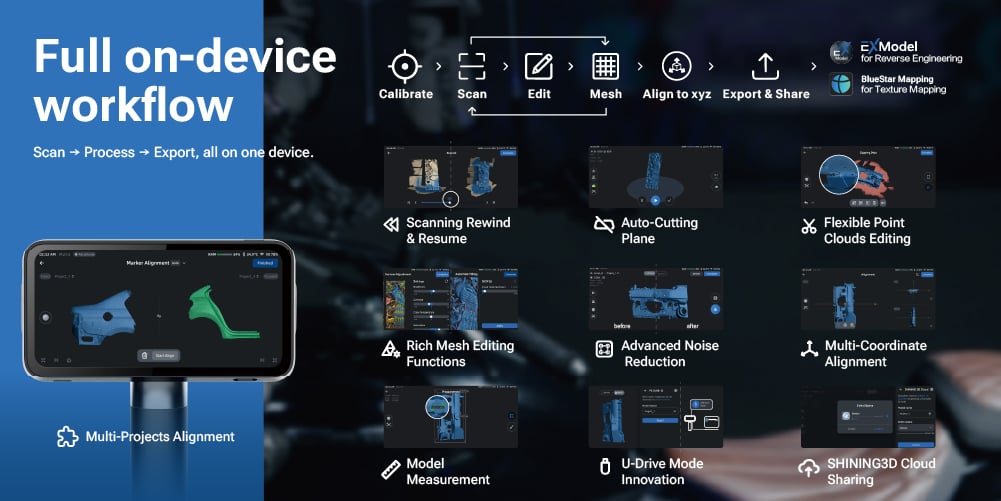
In today’s 3D scanning market, devices of all price ranges and levels often emphasize “high accuracy,” yet for professional users, it can be difficult to determine whether the advertised performance matches real-world results. To develop a product that can truly guarantee high accuracy, the following key conditions are essential: rigorous standards compliance traceable, certified artifacts and unit-level, maximum-error guarantee.
As the developer, designer, and manufacturer of the Rigil Series, SHINING 3D is a technically strong and experienced company. Since 2004, SHINING 3D has been developing advanced and accessible 3D scanning hardware and software. For over 20 years, the company has focused on R&D and manufacturing of high-precision 3D scanners, which empower professionals worldwide in industrial metrology, full-field inspection, 3D modeling, reverse engineering, and digital dentistry.
SHINING 3D ensures reliability and accuracy through meticulous calibration and strict adherence to international standards, following VDI/VDE 2634 Part 2 & 3 guidelines for calibration conditions, items, methods, and result handling.
- VDI/VDE 2634: Framework for traceable optical system accuracy (German engineering standard)
- ISO 10360-13: International standard for acceptance and re-verification of optical 3D CMM systems
The production and quality inspection areas are placed on specially isolated foundations with constant environmental temperature and humidity, ensuring that all accuracy testing and calibration are conducted under identical, controlled conditions, eliminating variability at its source.
Accuracy evaluation of a measuring device requires a reliable “ground truth” reference with higher precision. For metrology products, each reference artifact is certified using a high-precision Coordinate Measuring Machine (CMM), achieving accuracy up to 2.4 µm + 2.8L/1000 µm, ensuring its reliability as a standard. These artifacts are not verified only once, but are regularly recalibrated by accredited laboratories at defined intervals
Building on this foundation, SHINING 3D has established a comprehensive product-level accuracy testing framework. Professional-grade devices undergo a two-stage testing process, including production-line testing and final quality inspection. Metrology-grade devices are subject to even stricter accuracy requirements, undergo additional testing cycles throughout the same two-stage process, and must also pass CNAS-accredited testing. Supported by SHINING 3D’s in-house CNAS-accredited accuracy laboratory, SHINING 3D metrology products are delivered with official CNAS certificates and test reports.
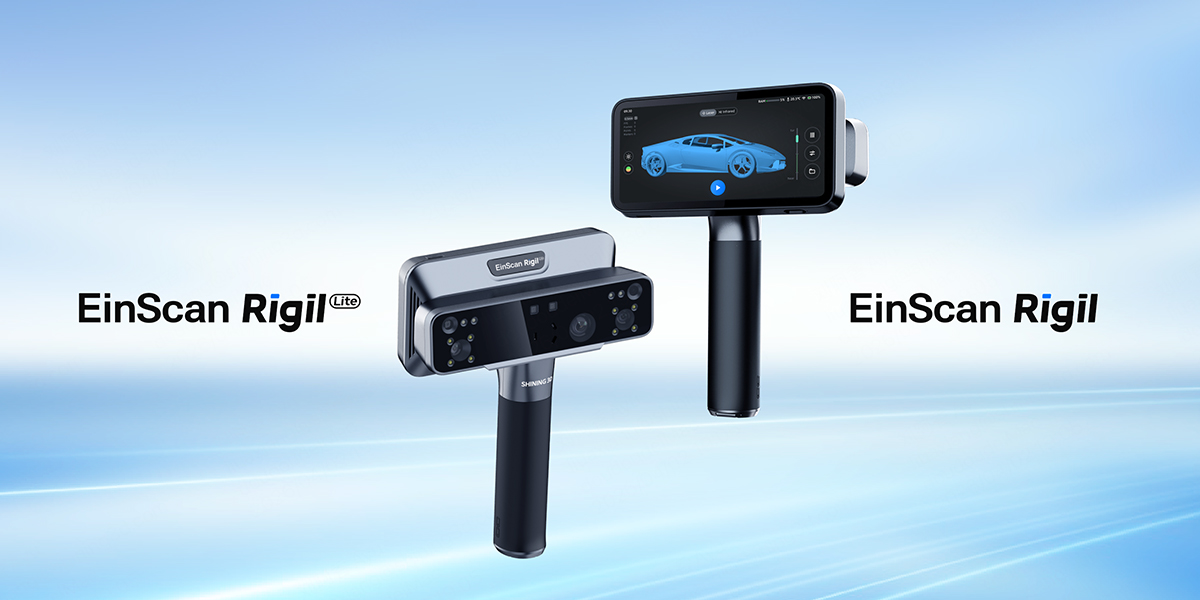
As a professional-grade scanner, each EinScan Rigil is subjected to five repeat tests using a 1000 mm sphere rod before leaving the factory, with the maximum deviation from each test—rather than the average—taken as the final accuracy result.