


PR/News
Published on 18th Nov. 2026
SHINING 3D Takes High-Precision 3D Scanning Wireless at Formnext 2026
SHINING 3D is presenting wireless scanning as a portfolio rather than a feature — from a phone-first AI scanner to a certified metrology 3D scanning system and the dental operatory.
Frankfurt, 17 November 2026 – SHINING 3D is using Formnext 2026 (Hall 12.0, Booth E01, 17–20 November) to present a 3D scanning range that has gone wireless end to end: an entry-level scanner that runs from a phone, all-in-one professional scanners with the computer built in, a standalone metrology system that inspects without a PC, and an intraoral scanner that has dropped its cart.
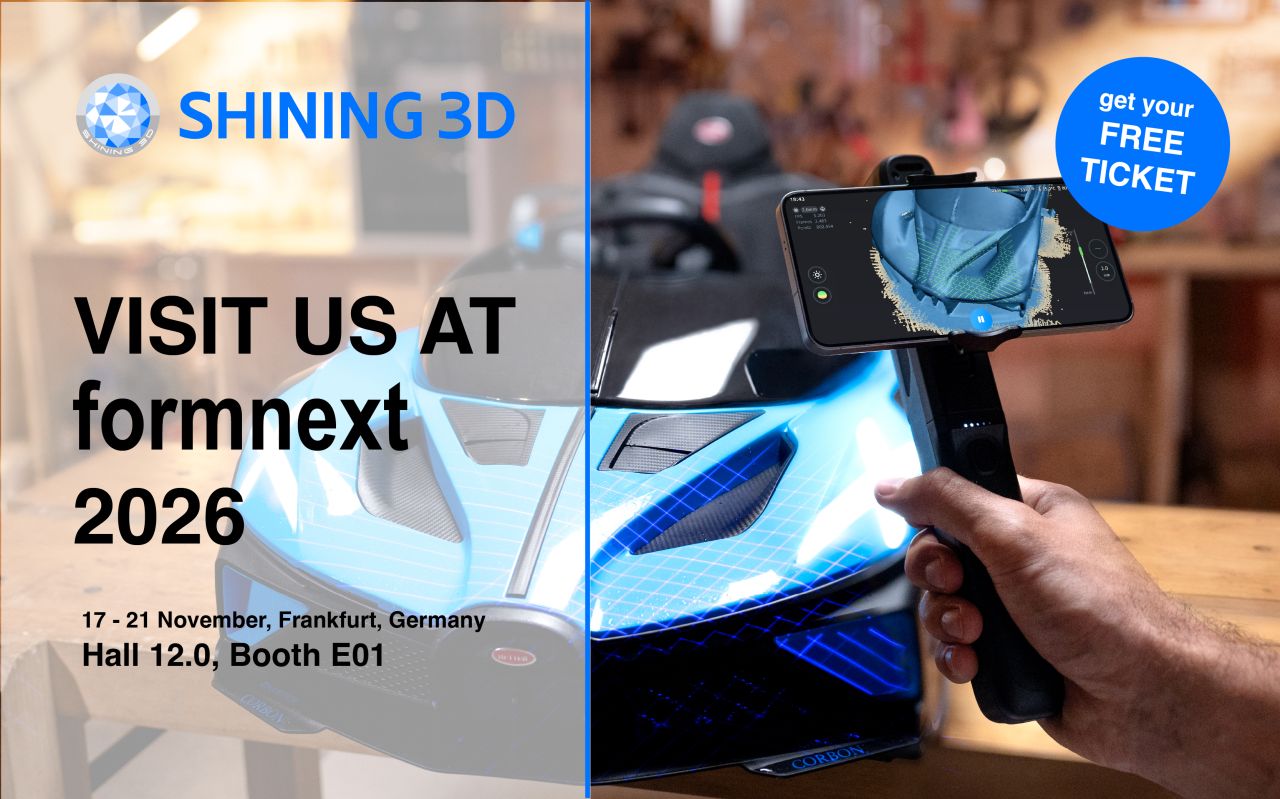
Visit SHINING 3D at Hall 12.0, Booth E01
A portfolio, not a product
SHINING 3D's argument in Frankfurt is that wireless is not something to be added model by model, but an architecture that has to hold at every level of precision the company sells into. The company has arrived at it in stages — wireless tracking first, then computing moved into the scanner body, then metrology-grade inspection without a PC, and now a phone-first device — each step removing another reason to keep the scanner near a desk. The breadth is the claim: the same untethered logic now applies from a first-time user's phone to a certified 0.02 mm measurement.
At the top of the range, FreeScan Trak ProW+ tracks a scanner without markers across an 8.6 m range and a 156 m³ volume. FreeScan Omni is a wireless, standalone metrology scanner that completes scanning, meshing, inspection and reporting on the device itself, with accuracy of 0.02 + 0.03 mm/m verified to VDI/VDE 2634 and aligned with ISO 10360. FreeScan Combo+ Wireless moves data over Wi-Fi 7, carries 93 blue laser lines and uses built-in video photogrammetry to hold volumetric accuracy on large parts.
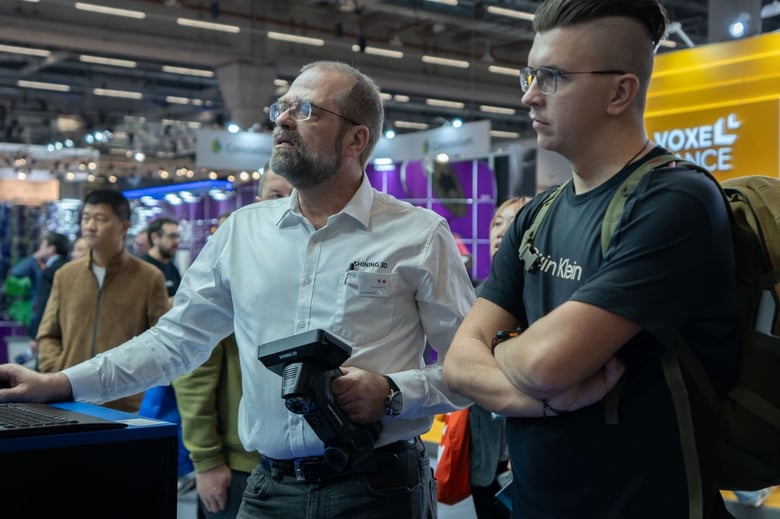
FreeScan Omni Series - Inspect on the move
Keeping accuracy inside that envelope is the hard part. SHINING 3D calibrates its metrology devices in an accuracy laboratory accredited to ISO/IEC 17025 and verifies performance against VDI/VDE 2634 and ISO 10360 — the same standards it quotes for the wireless Nova, Combo+ and Omni.
Further down the range, EinScan Trak applies the same principle to tracking: the company describes it as the first wireless, dual-form, marker-free tracking system. EinScan Libre and EinScan Rigil put the computer inside the scanner. Libre carries an NVIDIA Jetson Orin NX, a 5.5-inch OLED display and 1 TB of storage; Rigil adds a 6.4-inch 2K AMOLED screen, 32 GB of memory and a terabyte of storage, and runs standalone, over Wi-Fi 6 or wired.
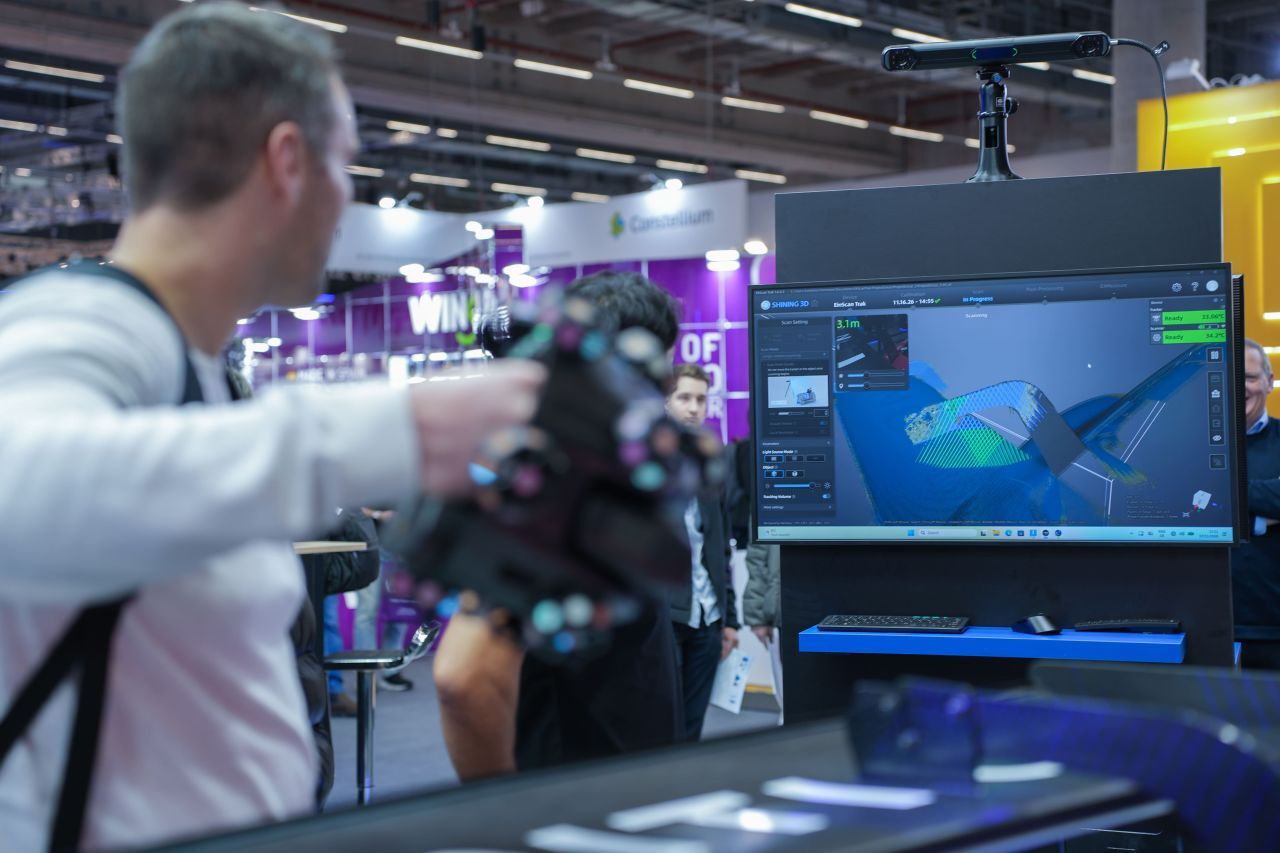
EinScan Trak
At the entry level sits EINSTAR EZ GO, the AI-powered mobile scanner SHINING 3D launched on 11 November. EZ GO separates into two parts: a compact scanning head carrying 15+15 crossed blue laser lines, a single-line laser for deep features and an infrared VCSEL projector; and a battery grip that holds a phone and runs for up to two hours. The company puts setup at roughly three minutes, and after the first pairing the device remembers the connection, so scanning starts at power-on rather than at network configuration.
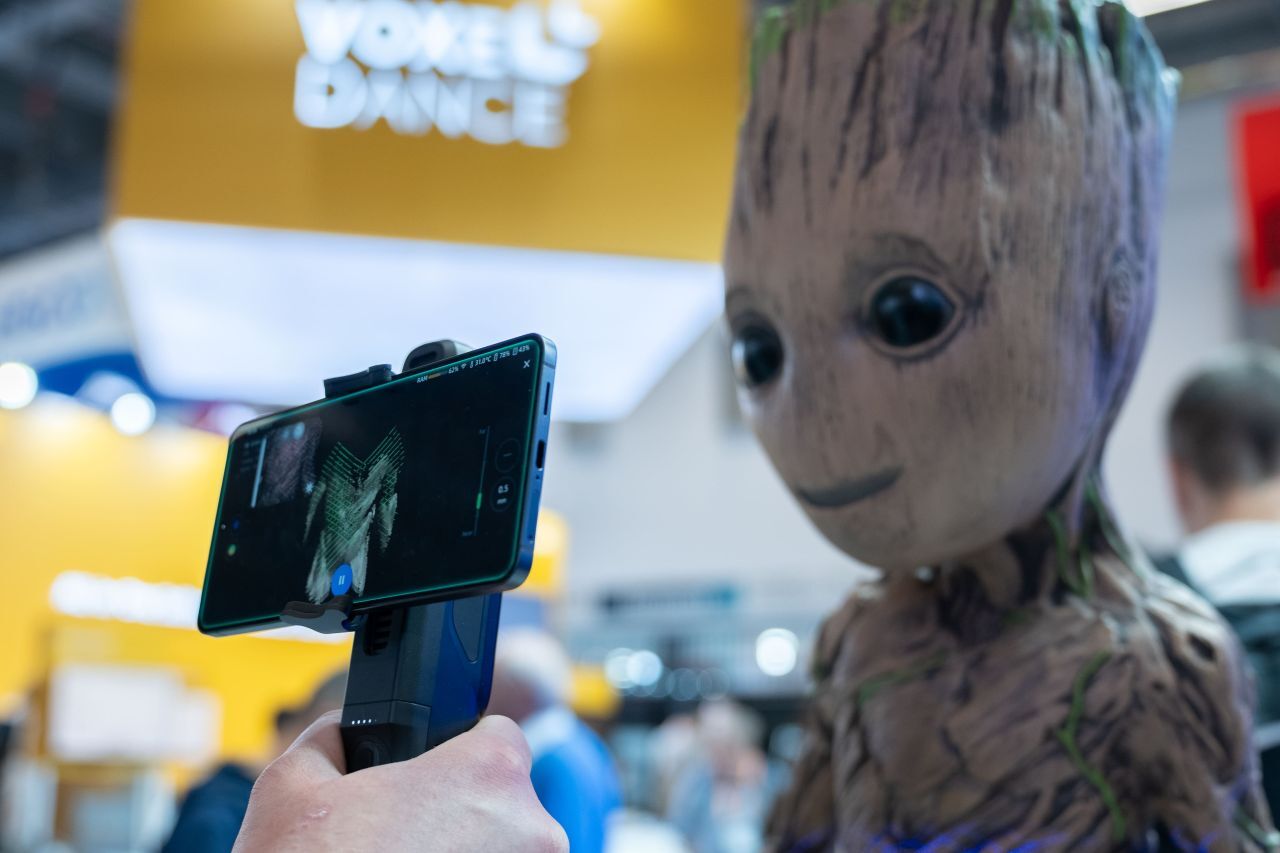
EINSTAR EZ GO
The operatory loses its cart
The same logic runs through SHINING 3D's dental business. Aoralscan Elite Wireless is the company's attempt to remove the last cable from the operatory: a 194 g intraoral scanner with Wi-Fi 6 and a two-hour battery that also carries intraoral photogrammetry (IPG), the technique used to capture implant positions in full-arch All-on-X cases. SHINING 3D says it is the first device to combine wireless intraoral scanning with photogrammetry, and its coded scanbodies are compatible with more than 100 implant brands.
For a clinic the difference is not cosmetic. A wired scanner anchors the clinician to a cart and a screen; a wireless one moves between chairs, and the scan happens where the patient is rather than where the equipment is.
On the stand: Scan. Share. Win.
Visitors to Booth E01 can join the #EZGOChallenge: scan an object with EZ GO, post the result to Instagram with #EINSTARbySHINING3D and #EZGOChallenge, and collect a gift on the stand. Every entrant goes into the draw for an EINSTAR EZ GO scanner; the winner will be announced on 24 November.
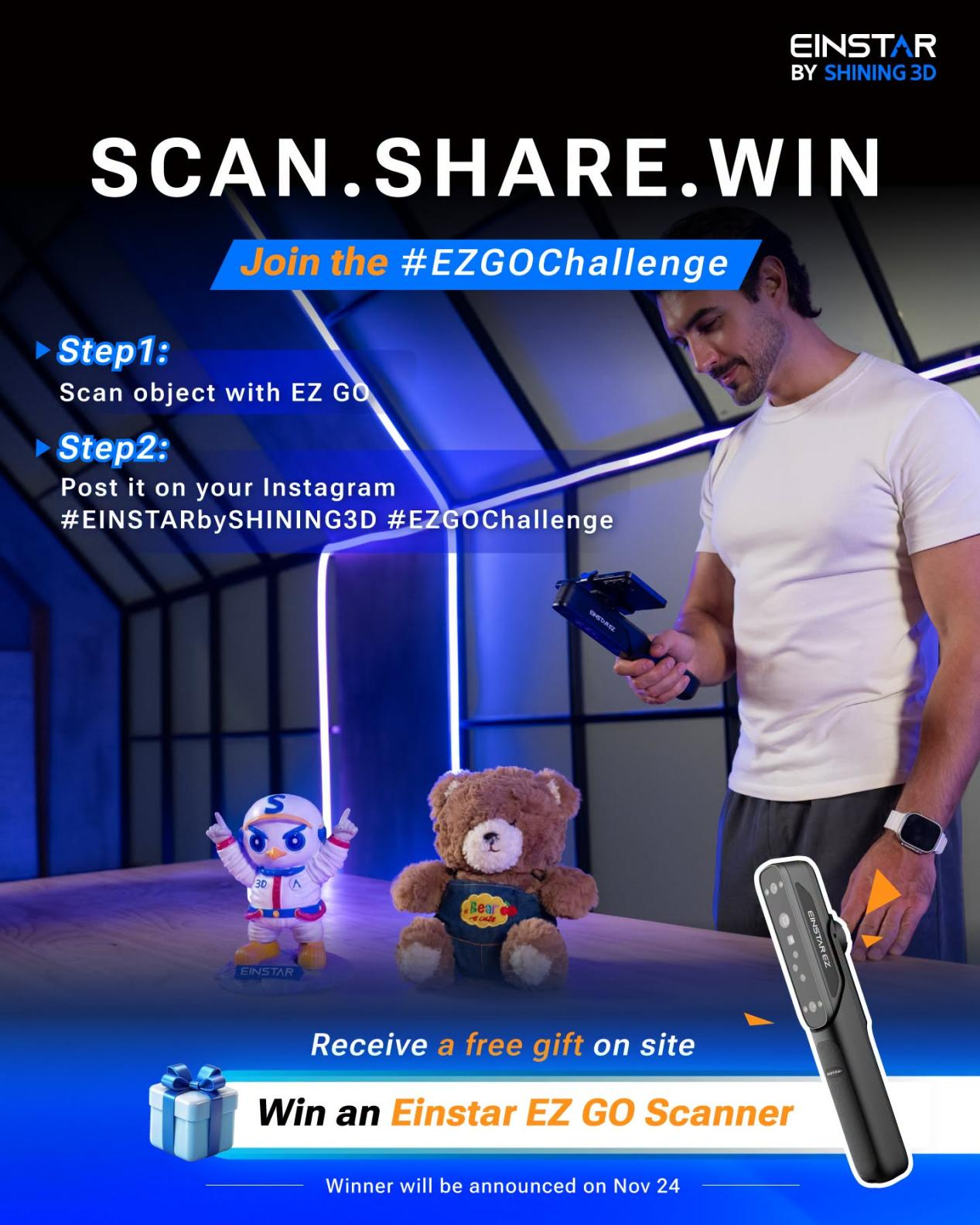
SHINING 3D scan challenge
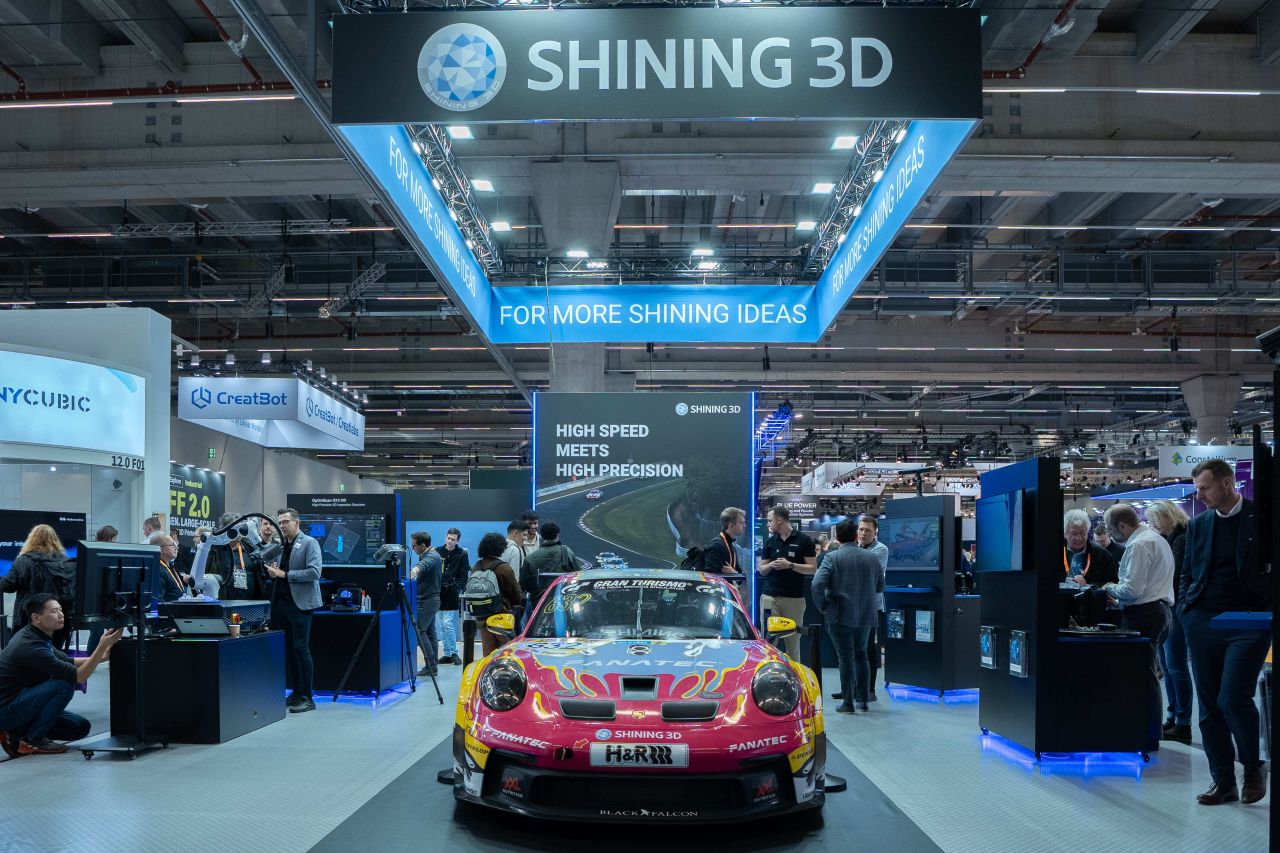
The stand is laid out in zones — mobile and EZ GO, dental, metrology and inspection, and a simulator area.
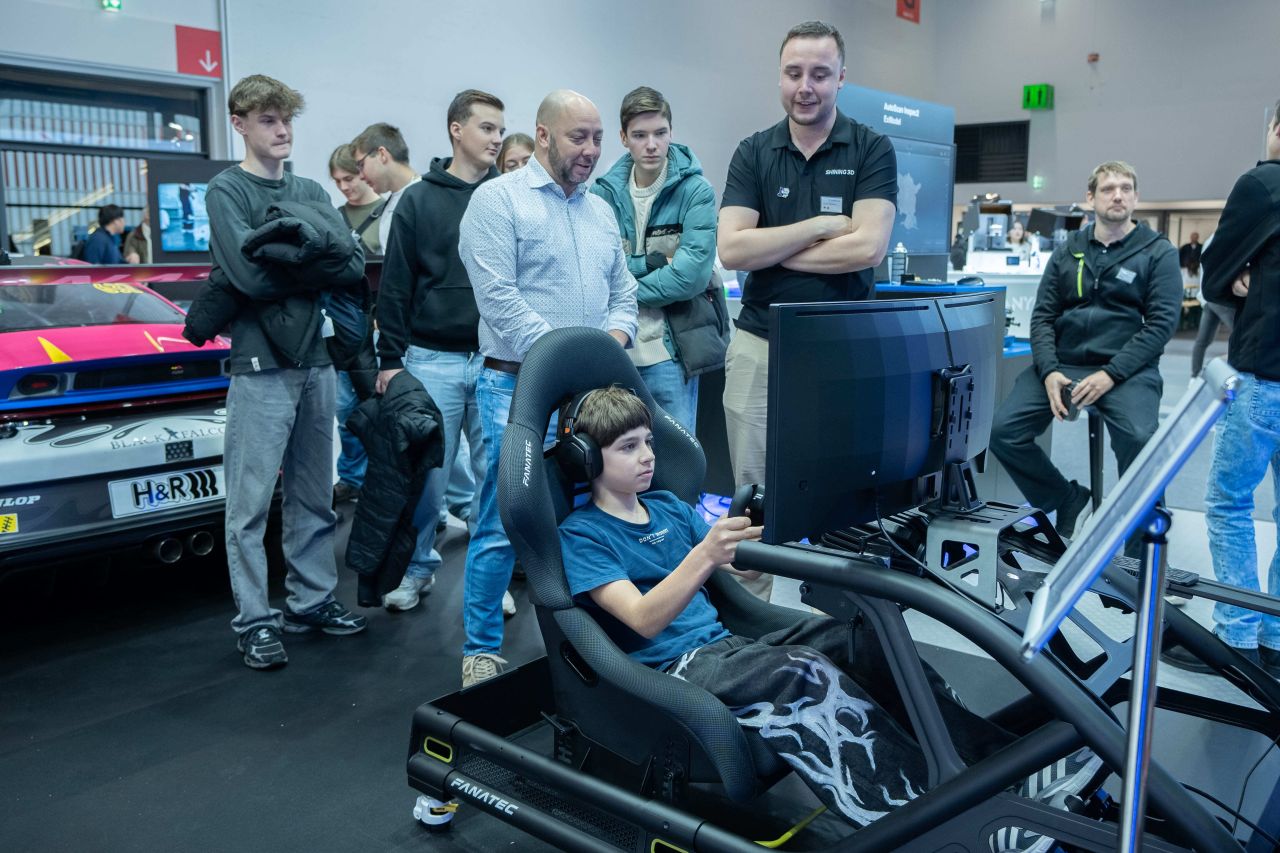
Visit SHINING 3D booth simulator area
Formnext 2026 runs from 17 to 20 November at Messe Frankfurt. SHINING 3D is at Hall 12.0, Booth E01.
SHINING 3D Booth @ Formnext 2026
Share on Social Media


