


CASE STUDIES
Published on May. 25th 2026
SHINING 3D Enables Long-Range Voyages for New-Energy Sailboats with High-Accuracy 3D Scanning
SHINING 3D’s high-accuracy 3D scanning technology helps the electric catamaran HighWei 66 achieve accurate digital inspection and manufacturing optimization, overcoming aluminum hull deformation challenges and accelerating the future of sustainable smart sailing.
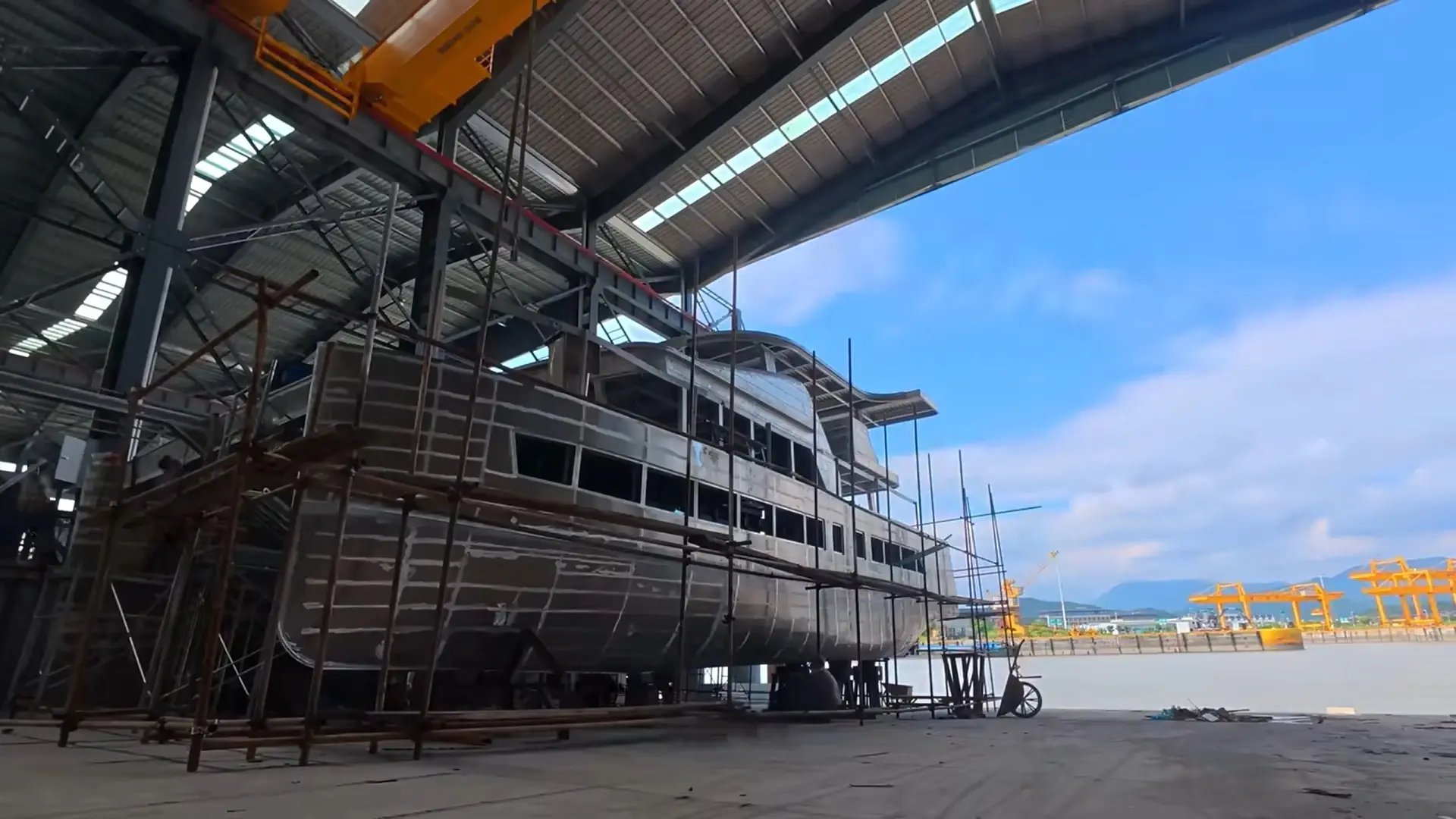
Along the banks of the Qiantang River in Hangzhou, an unconventional electric catamaran is quietly taking shape.
For veteran sailor and engineer Hu Wei, the limitations of traditional diesel-powered sailboats have long been apparent: complicated handling, demanding maintenance, excessive noise, and fuel pollution. Backed by China’s strong manufacturing capabilities and rapidly growing new-energy supply chain, Hu and his team set out to build a sailboat designed for the future — one that fundamentally rethinks marine propulsion and even abandons the centuries-old rudder system altogether.
But turning this vision into reality brought major engineering challenges.
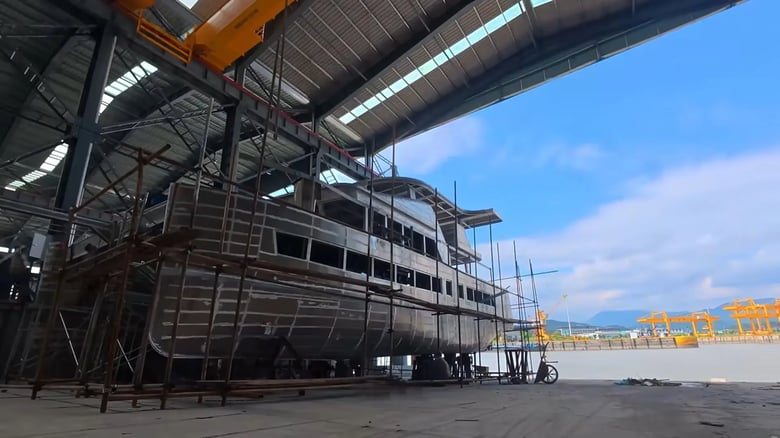
The vessel’s aluminum-alloy hull, while lightweight and highly durable, involves extensive welding during construction. Thermal deformation caused by welding can significantly affect dimensional accuracy and hydrodynamic performance. To optimize the hull design, improve manufacturing precision, and ultimately prepare the vessel for commercialization, the team needed a more advanced digital inspection solution.
Now, SHINING 3D’s high-accuracy 3D scanning technology is helping transform an ambitious concept into a seaworthy reality.
A Next-Generation Electric Catamaran Designed to Challenge Convention
Over the past several decades, Hu Wei has built a career spanning submarine cable engineering and international project management. He founded his own sailing club and developed a deep understanding of both the strengths and shortcomings of conventional sailboats.
Eventually, one question began to take shape: Why not build a sailboat truly designed for the future?
With an investment of tens of millions of RMB, Hu Wei’s team began developing the “HighWei 66,” a new-energy catamaran built around electric propulsion technologies.
The vessel integrates sails, a variable-pitch electric propulsion system, solar power generation, and regenerative energy recovery technologies. Without relying on diesel fuel, it is capable of sailing thousands of nautical miles and, in theory, even undertaking polar expeditions.
Most remarkably, the HighWei 66 eliminates both the traditional rudder and diesel main engine. Instead, directional control is achieved through dual electric motors, variable-pitch propellers, and intelligent control algorithms.
With this bold engineering philosophy, Hu Wei and his team hope to redefine the future of new-energy sailing vessels.
Solving Aluminum Hull Deformation with High-Precision 3D Scanning
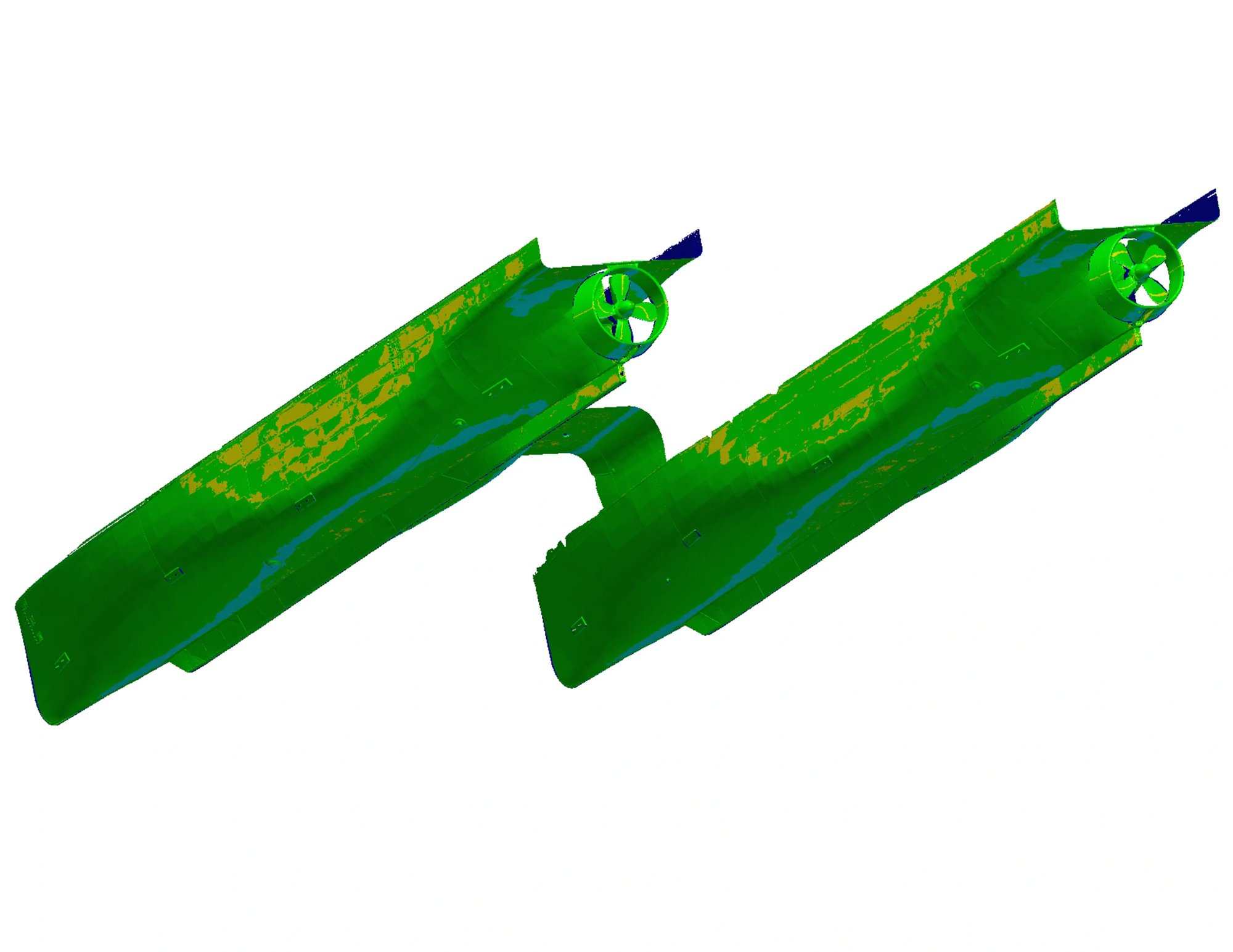
To meet the demands of long-range ocean travel, the HighWei 66 adopts a lightweight yet high-strength aluminum-alloy hull structure. However, aluminum alloy is particularly susceptible to thermal deformation during welding and fabrication, making dimensional control extremely challenging for large marine structures.
Traditional shipbuilding inspection methods rely heavily on manual tools such as tape measures and calipers. While suitable for local measurements, these methods cannot capture complete full-scale 3D geometry, nor can they accurately quantify overall hull deformation.
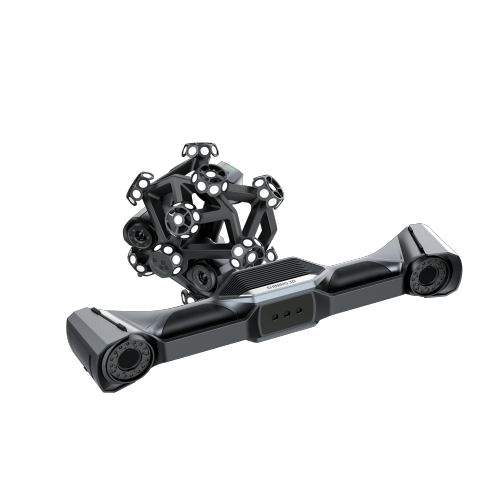
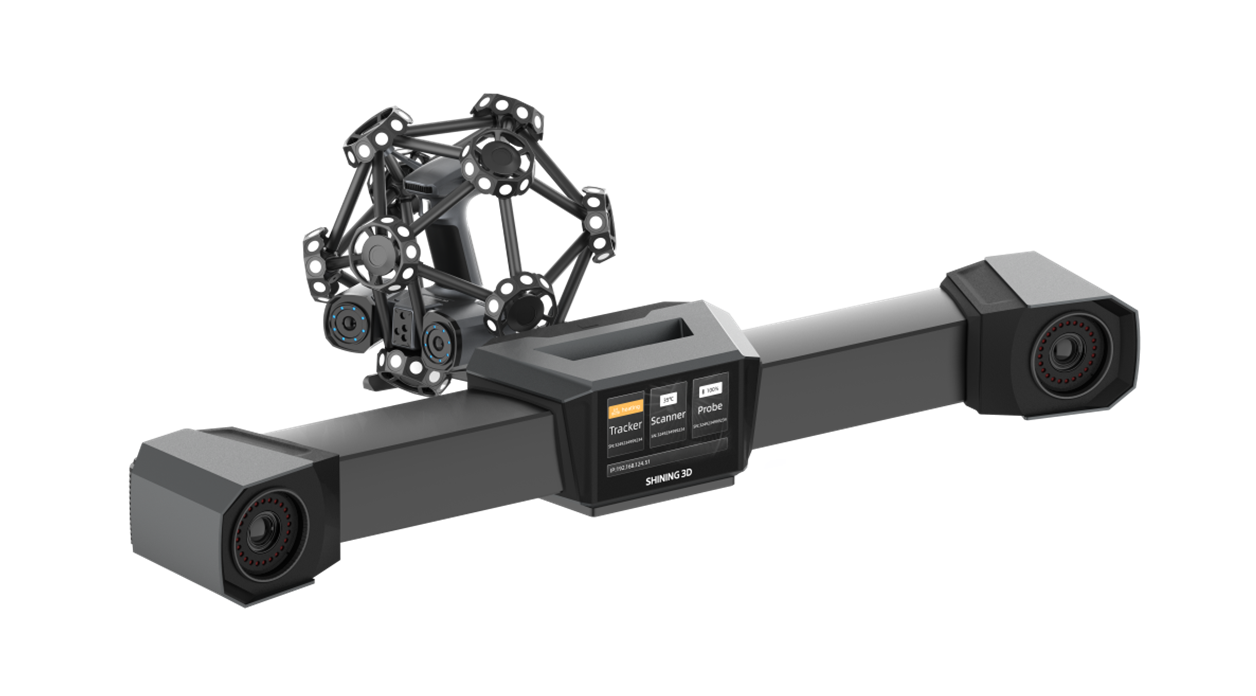
To address this challenge, the team introduced the FreeScan Trak series scanner from SHINING 3D.
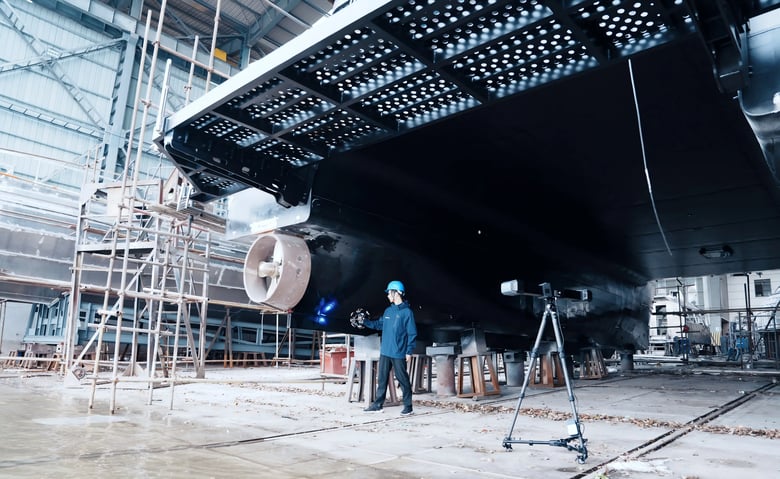
Designed specifically for large-scale industrial measurement, the scanner offers wireless operation, dynamic tracking over large areas, high accuracy, and fast scanning efficiency — making it ideal for shipbuilding applications.
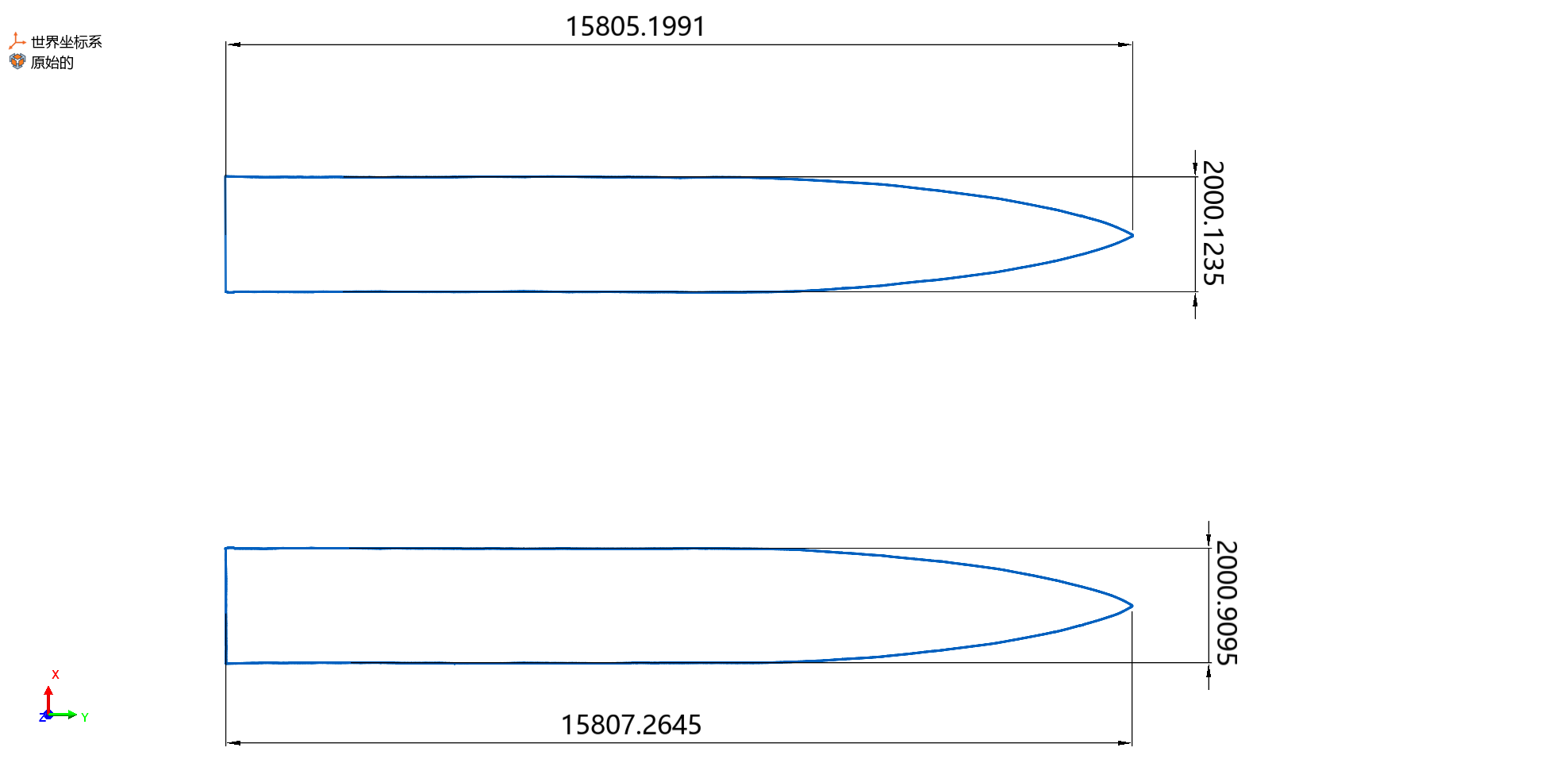
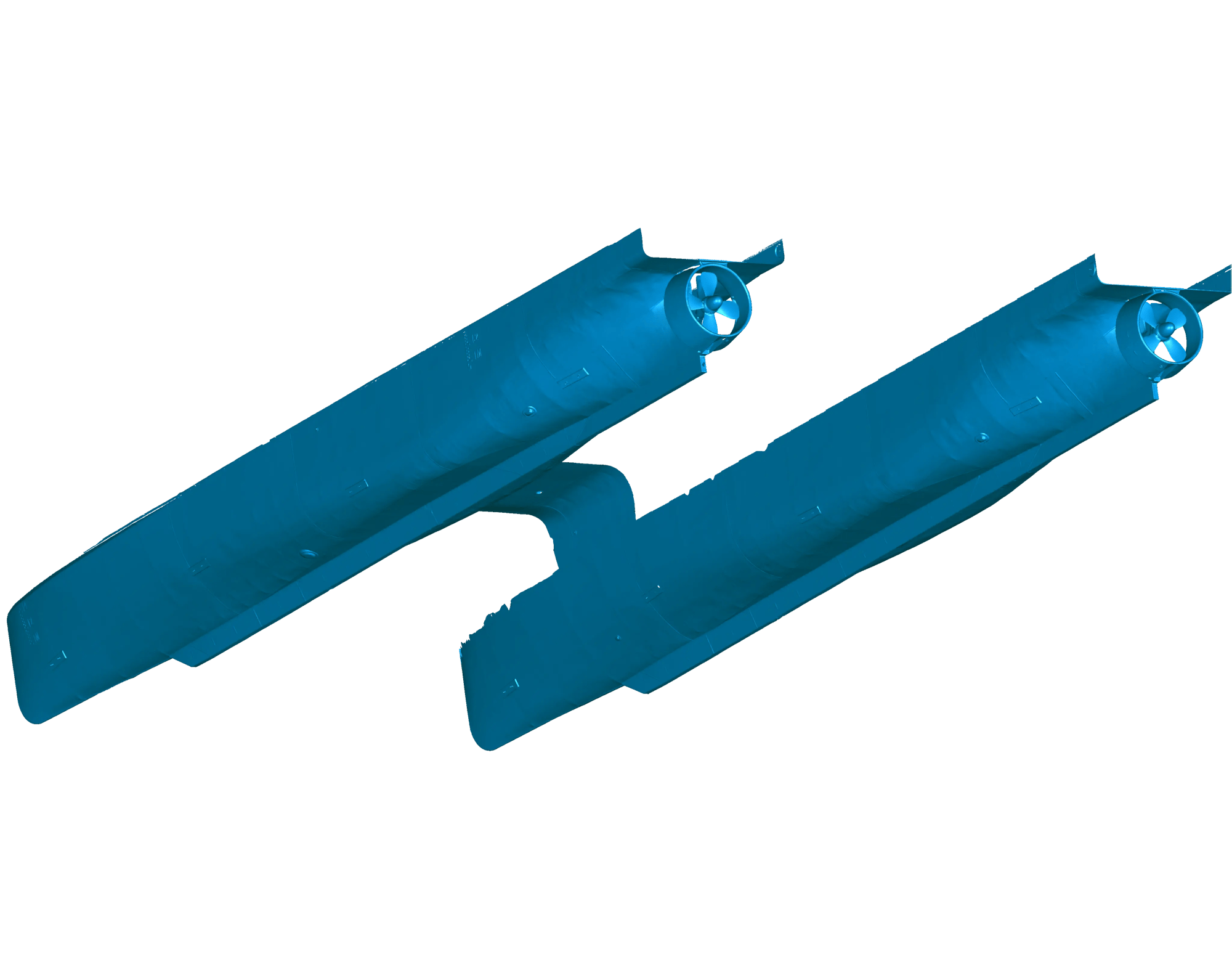
The system captures complete hull geometry without markers. This allows engineers to accurately measure critical dimensions such as the length, width, and perimeter of catamaran waterline cross-sections.
Discover the product you're looking for
- Full specifications
- Using scenarios
- Key features
- Even comes with a bundle!
Share on Social Media


