


CASE STUDIES
Published on Mar. 30th 2026
How ORTHOtechnik M4 Continues to Simplify the Cranial Helmet Therapy Process
Instead of using plaster casts, ORTHOtechnik M4 began offering cranial helmet therapy with advanced scanning technology and gradually upgraded their equipment as newer EinScan Medixa became available. Discover their journey in orthotic digital workflow.
For infants diagnosed with skull deformities, early intervention plays a critical role in guiding healthy cranial development. Cranial helmet therapy is widely used to gently shape a baby’s skull over time—but the effectiveness of this treatment depends heavily on one key factor: accurate head measurement.
Traditionally, this has been achieved through plaster casting. However, for many clinicians, especially when working with infants, this method presents practical and emotional challenges.
When ORTHOtechnik M4 in Austria began offering cranial helmet therapy five years ago, the team made a deliberate decision:
rather than adapting traditional casting methods, they would build the workflow entirely around digital technologies from the start.
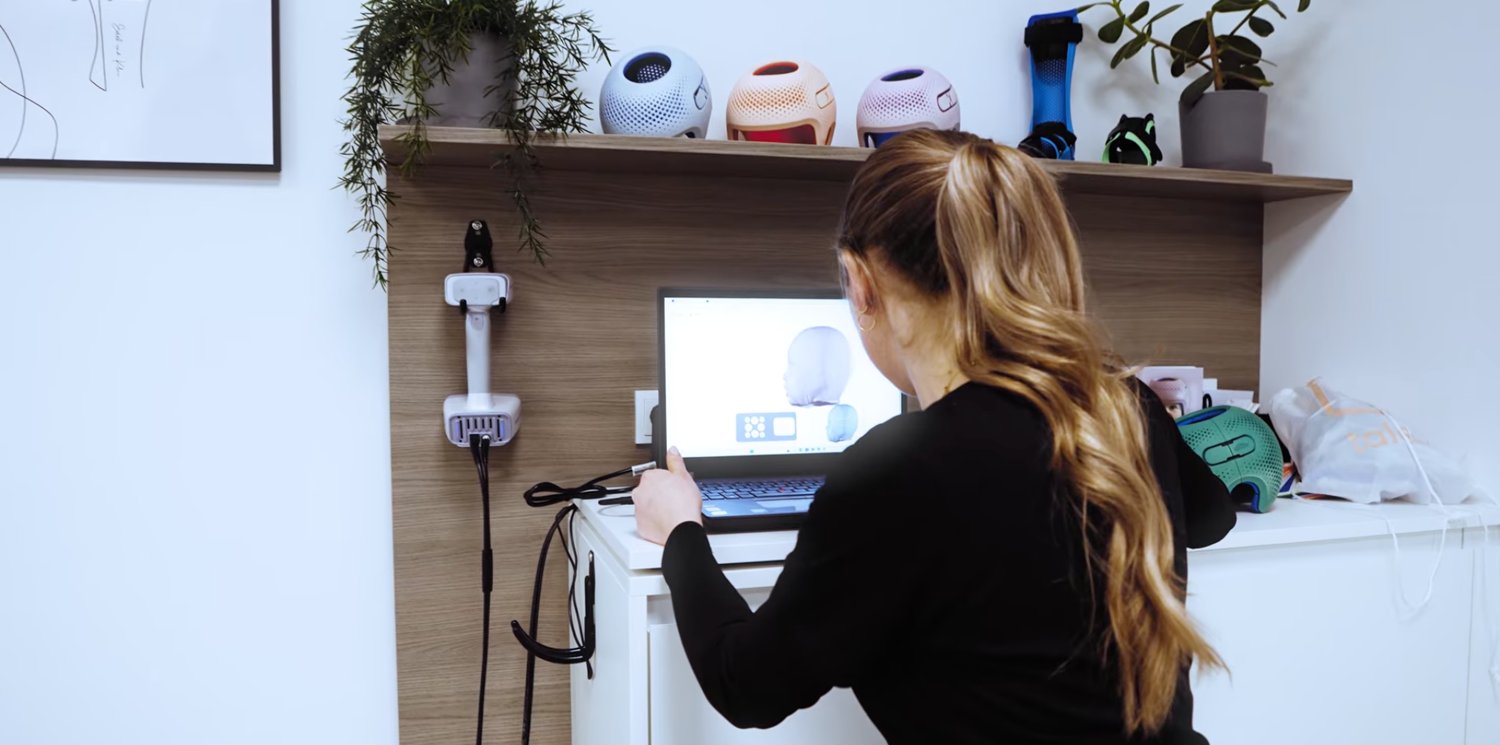
"We only started using head helmets five years ago, and we started out using scanning technology exclusively. We never used plaster casts."
-- Gerald Kastner, Head of Orthopedic Technology at ORTHOtechnik M4
This early commitment to digital workflows laid the foundation for a more efficient and patient-friendly treatment process.
Why Move Away from Traditional Casting?
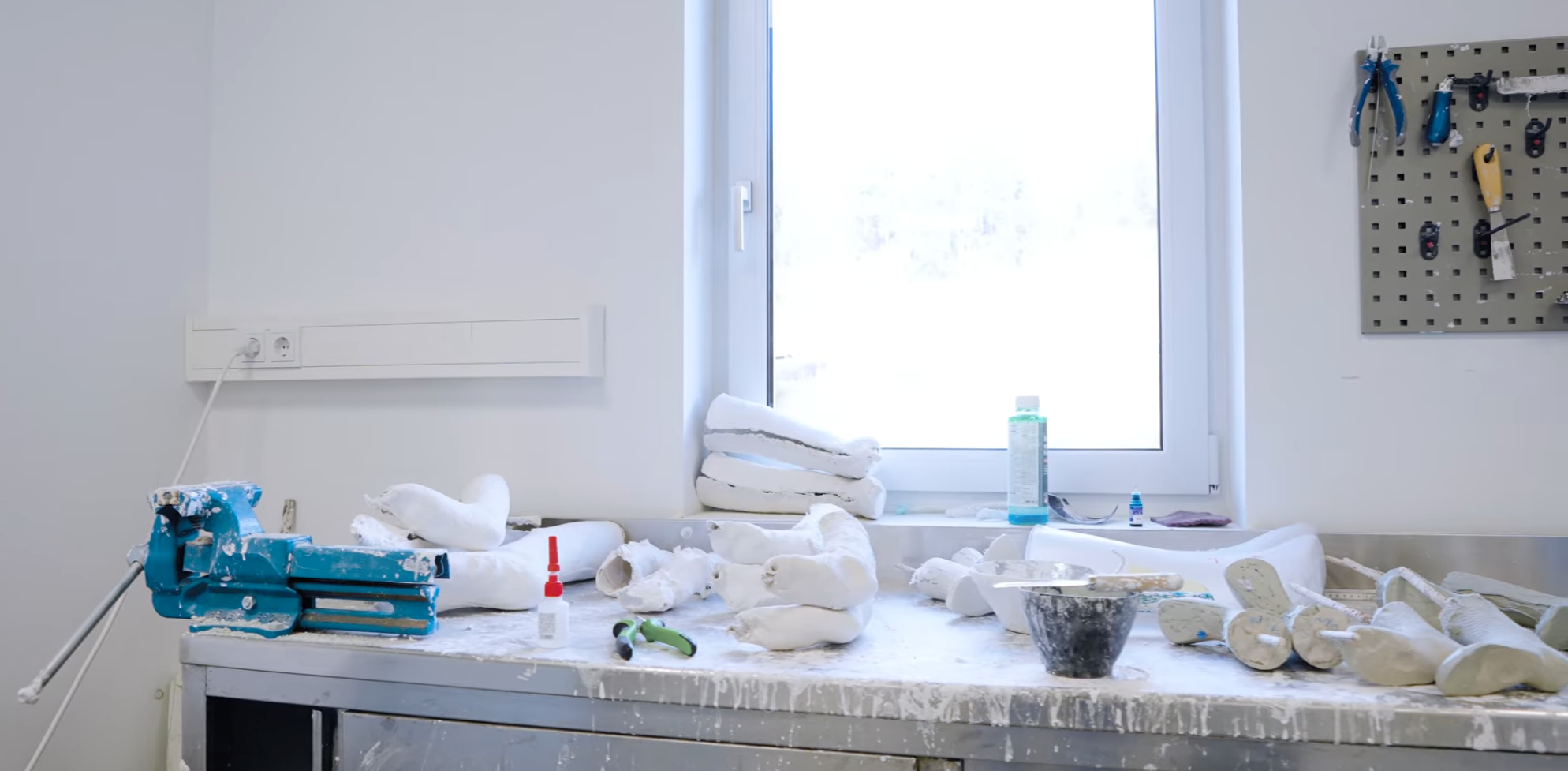
Although the team had prior experience using plaster casting for hands and feet, applying the same method to infants’ heads raised immediate concerns.
Cranial helmet therapy requires not only precision, but also a process that is safe, fast, and minimally stressful. In practice, traditional casting often falls short in several ways:
-
Discomfort for infants
-
Stressful experience for parents
-
Time-consuming procedures
-
Risk of inaccuracies
As orthopedic technician Hannah Sigl explains: "I can't imagine it being any other way, because just the idea of putting a cast on a baby's head doesn't seem easy to me."
Building the First Digital Workflow with EinScan H2
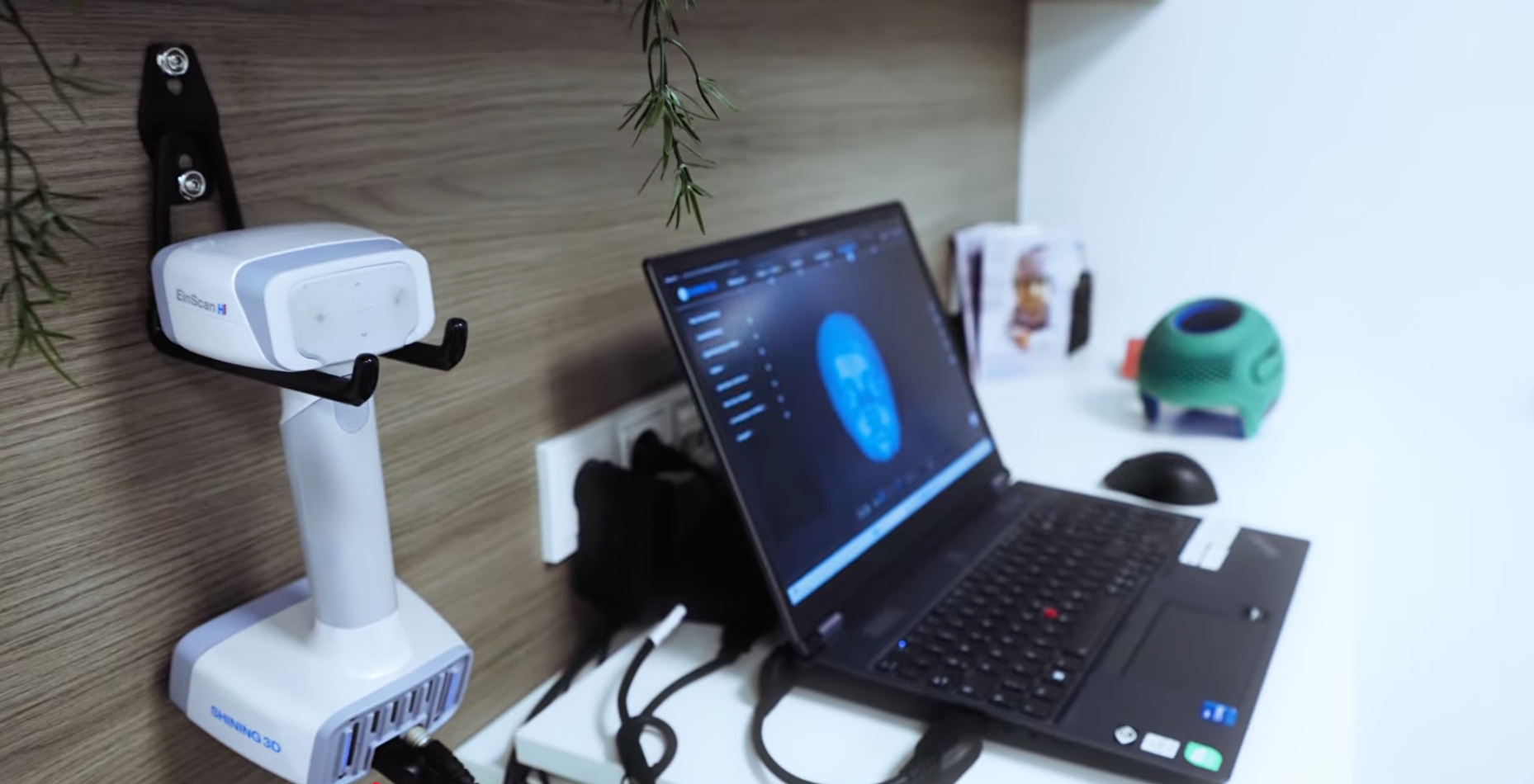
To address these challenges, ORTHOtechnik M4 implemented a fully digital workflow centered around 3D scanning and 3D printing. The EinScan H2 became a key component in this first phase.
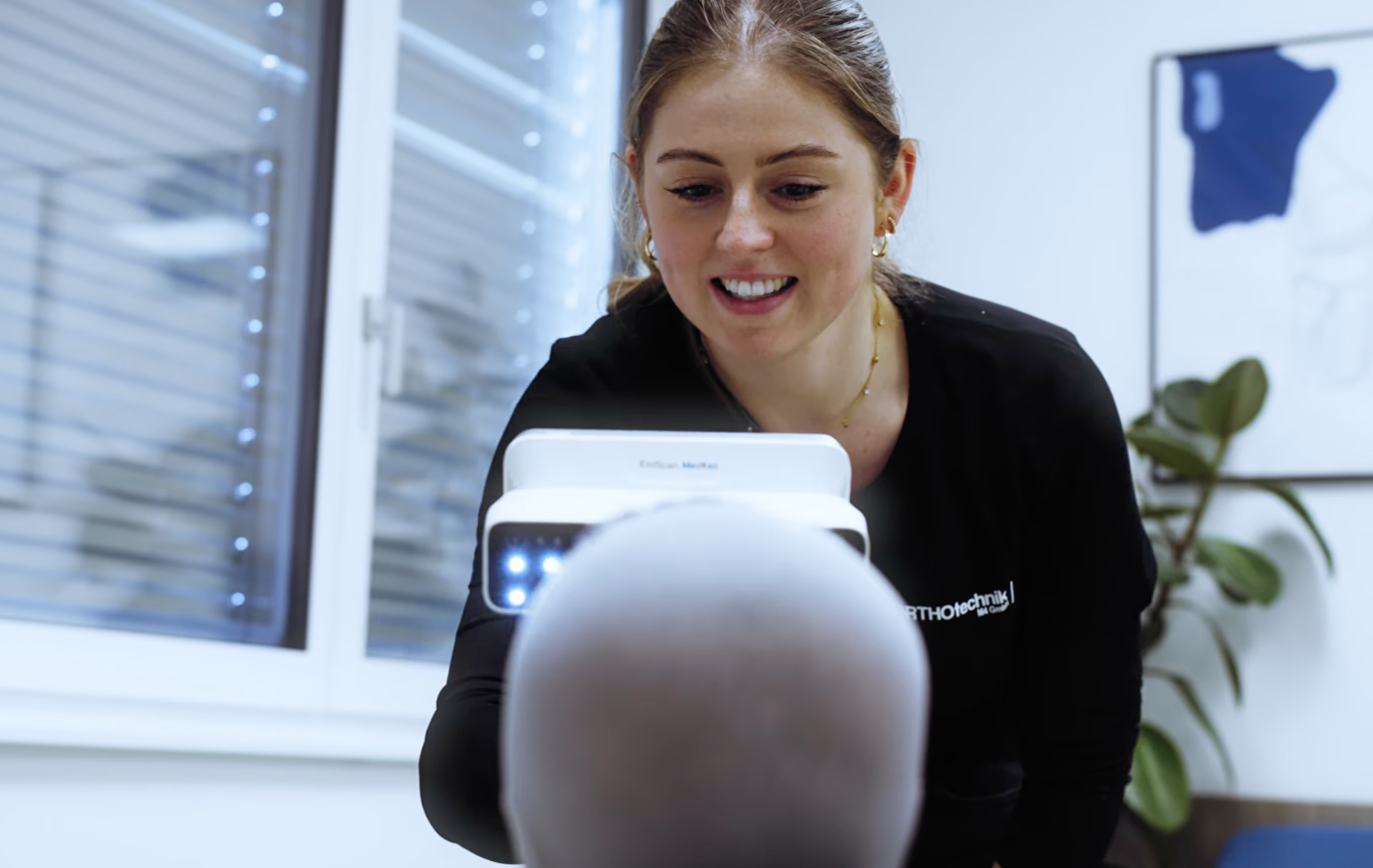
With the ability to capture precise head data in as little as 30 seconds, the scanning process significantly reduced the burden on both patients and clinicians. This speed is particularly important when working with infants, who have limited tolerance for long procedures.
As Hannah notes, it's so simple today with 3D scanning or with a scanner... It works so smoothly, so easily, and the children don't cry.
This efficiency also improves the experience for families. One parent of a young patient shared their initial lack of expectations and subsequent pleasant surprise.
"I find 3D measurement very practical, especially when it comes to small children. The process is very entertaining; it only takes a certain amount of time to hold their attention, and then it's over. Especially with a child, I find that many things are complicated, and it was simply a brief relief that this wasn't a long process."
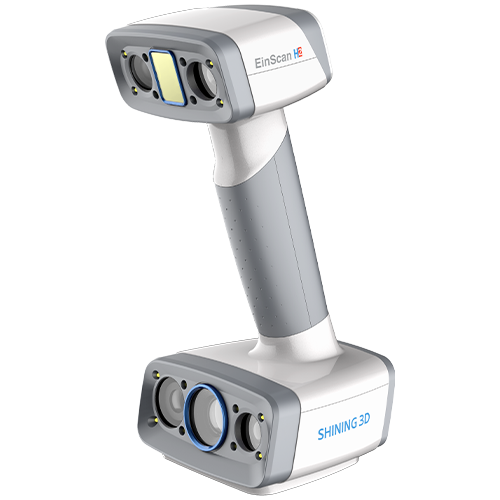
EinScan H2
The EinScan H2 is a hybrid LED & infrared light source handheld 3D scanner. It improves on its predecessor with a 5MP resolution texture camera, enhanced accuracy, and 3 infrared VCSEL projectors for more photorealistic textures and better-quality data
- Photorealistic Texture
- Ultra-wide FOV
- Optimized for Face & Body 3D Scan
Transitioning to EinScan Medixa
While the EinScan H2 enabled a reliable digital process, daily clinical use revealed opportunities for further optimization—particularly in flexibility, ease of use, and handling real-world challenges such as patient movement. Rather than changing their workflow, ORTHOtechnik M4 aimed to refine and simplify it further. This led to the transition to EinScan Medixa.
The move to the EinScan Medixa wasn’t just about adopting a new device—it was about improving the workflow that already worked well, and making it simpler and more flexible in practice.
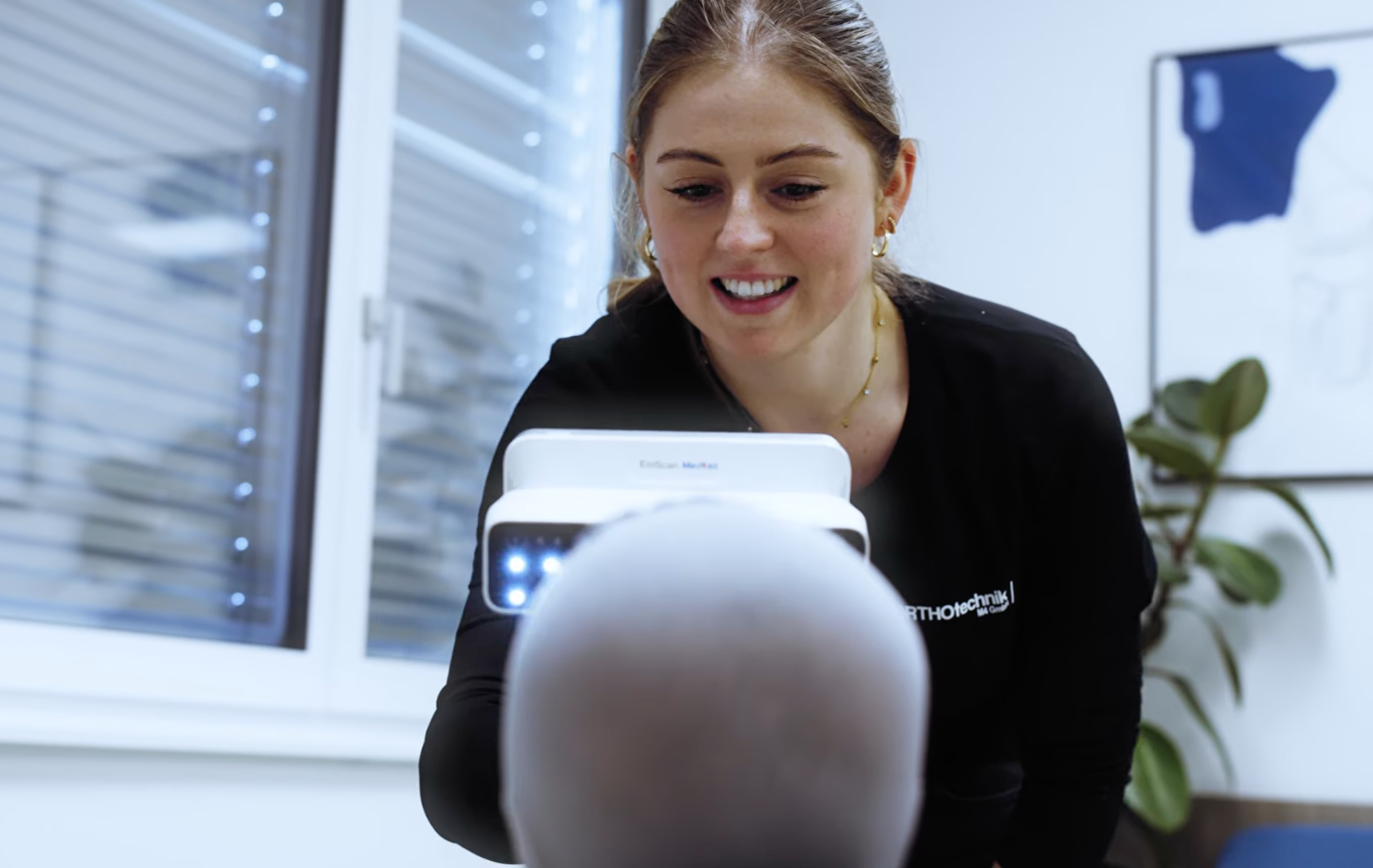
Key improvements of EinScan Medixa:
-
Wireless & Portable: compact and cable-free system simplifies preparation and operation, allowing the team to move more freely around the patient or for on-site scanning scenarios.
-
Configured scanning parameters: provides preset scan modes for different body parts, allowing clinicians to start scanning quickly without manual setup and scan data can be directly processed on the device.
- Customized: Medixa also allows custom parameter settings based on the clinician’s specific needs.
- Enhanced algorithms: when working with infants, movement is always a challenge. Medixa is able to compensate for slight patient movement during scanning, making the result more accurate.
- Flexible integration: Medixa also supports integration with design platforms or hospital systems, allowing scan data to be transferred seamlessly into the next steps of the workflow.
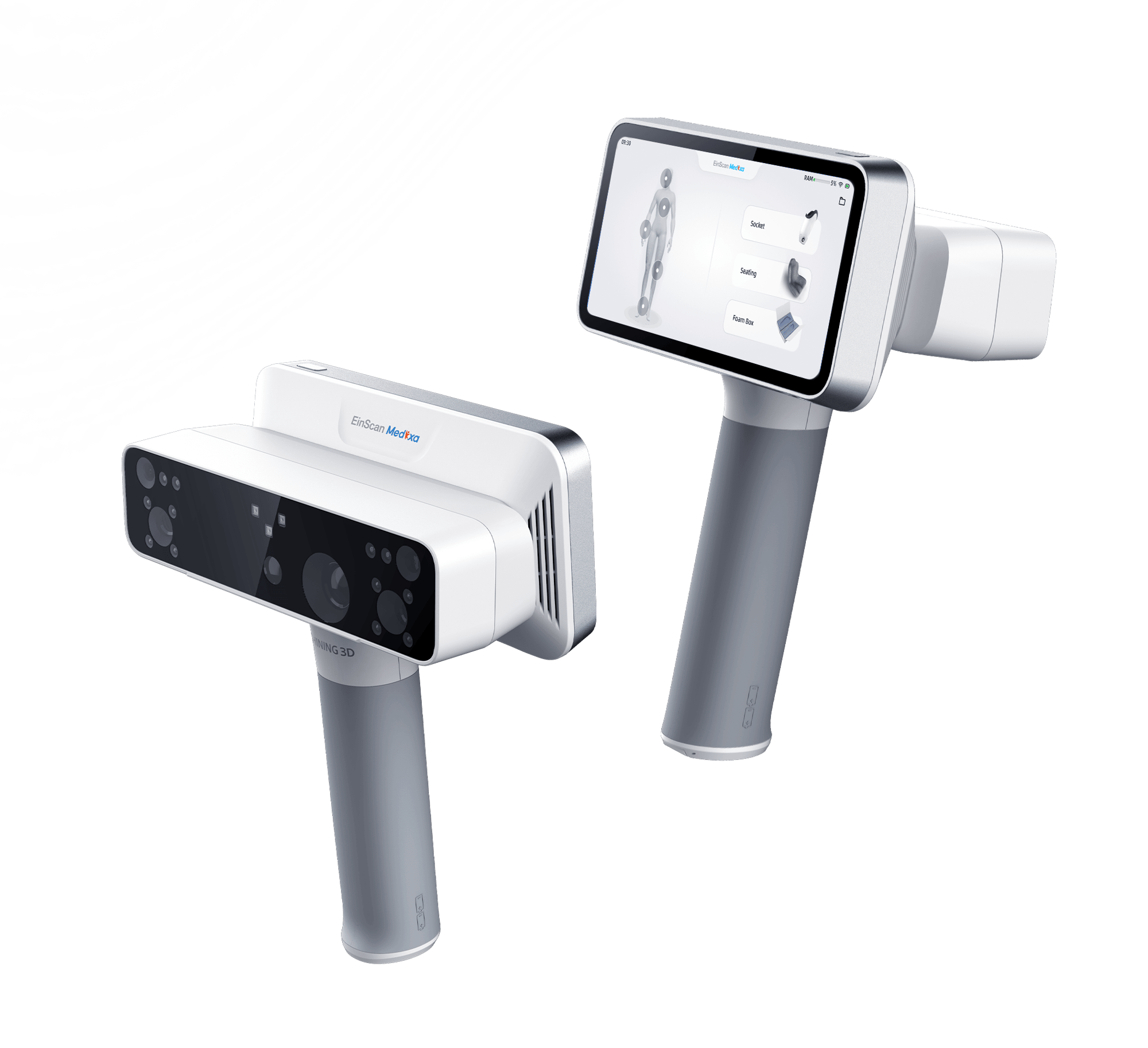
EinScan Medixa
A wireless, all-in-one 3D scanner is designed specifically for orthotics and prosthetics. The contact-free and fully digital method empowers O&P clinicians to deliver patient care with greater efficiency, precision, and ease.
- Tailored workflow for orthotics & prosthetics
- Versatile & personalized scan presets
- Movement compensation
- Contact-free and patient-friendly
Conclusion
At ORTHOtechnik M4, the transition from EinScan H2 to EinScan Medixa represents a natural evolution of an already digital workflow. Rather than changing how they work, Medixa further simplifies the process—making scanning more portable, more flexible, more intuitive, and more robust in daily clinical use.
For clinicians, this means greater efficiency. For patients and their families, it means a faster, easier, and more comfortable experience.
About ORTHOtechnik M4
As a part of the ORTHOtechnik family, ORTHOtechnik M4 provides customers with high-quality medical assistive devices, ranging from wheelchairs to rehabilitation tools to assist with walking, standing and sitting. They also produce custom orthoses and prosthesis in their own workshop with the highest standards. By integrating modern manufacturing technologies like 3D scanning and 3D printing, ORTHOtechnik M4 achieves personalized and precise adjustments for their patients.
Share on Social Media


