


CASE STUDIES
Published on Jun. 15th 2026
How a Stamping Parts Manufacturer Slash New Model Development Time by One-Third
Skip the fixture. Save months. Learn how automotive stamping parts inspection got faster, cheaper, and more flexible with SHINING 3D metrology.
In automotive manufacturing, every new model launch is a race against the clock. Deadlines are tight. Parts are complex. And there is zero room for defects. Any delay in inspection can throw off the entire production schedule. For stamping parts, traditional inspection fixtures have long been the bottleneck. Developing a fixture takes weeks, and each new part needs its own custom fixture. That process is expensive. And it is painfully slow.
But what if you could skip the fixture altogether?
Enter high-precision 3D scanning. No fixtures. No waiting. Just accurate, full-field inspection in minutes.
When the Fixture Becomes the Bottleneck
Liuzhou Yinrui Vehicle Industry Co., Ltd. is a National High-Tech Enterprise and a recognized "Specialized and Sophisticated SME" in Guangxi. The company supplies stamping parts and assemblies to major automakers, including SAIC-GM-Wuling, Dongfeng Liuzhou Motor, and Liuzhou Special Vehicle Plant. These customers demand high quality and fast delivery. Any delay in part inspection can directly affect vehicle assembly lines.
In the past, inspecting stamping parts meant using custom fixtures — one fixture per part. Fixture development typically took 1.5 to 2 months. By the time a part prototype was ready, the fixture was often still weeks away from completion. For complex parts that required top-and-bottom inspection, sometimes two separate fixtures were needed. The cost added up quickly, and the waiting slowed down everything.
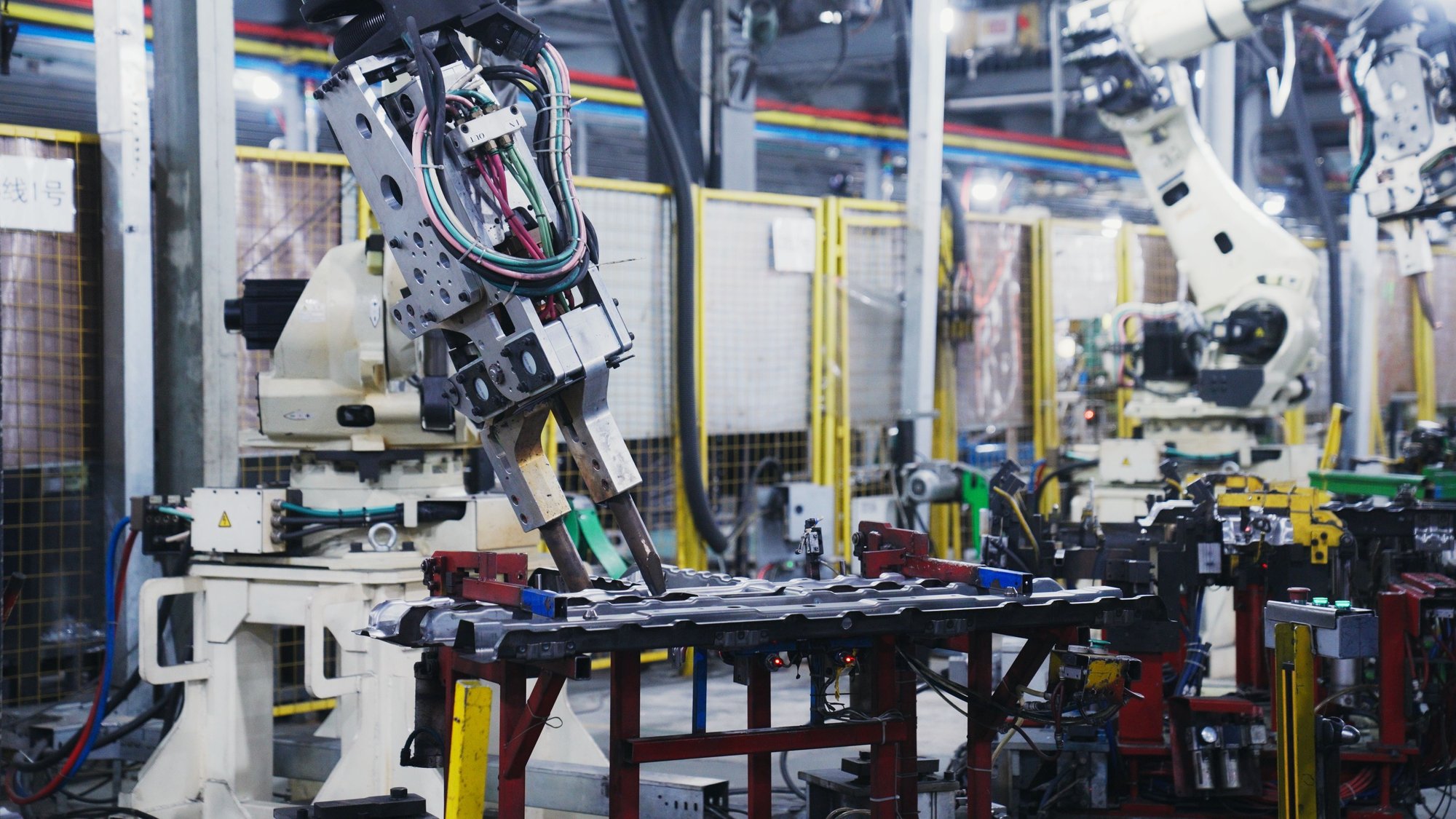
Yinrui needed a better way. They wanted to inspect parts as soon as they were produced — without waiting for fixtures. They needed speed, accuracy, and flexibility across many different part shapes. And they wanted to reduce the high cost of building dedicated fixtures for every new part.
Traditional methods also had another downside: they required operators to manually measure point by point. That was not only slow but also prone to human error. With so many different stamping parts coming through the workshop, the inspection team was constantly struggling to keep up. That is when Yinrui started looking at high-precision 3D scanning as an alternative.
A Wireless, Tracking System That Delivers Instant Meshes
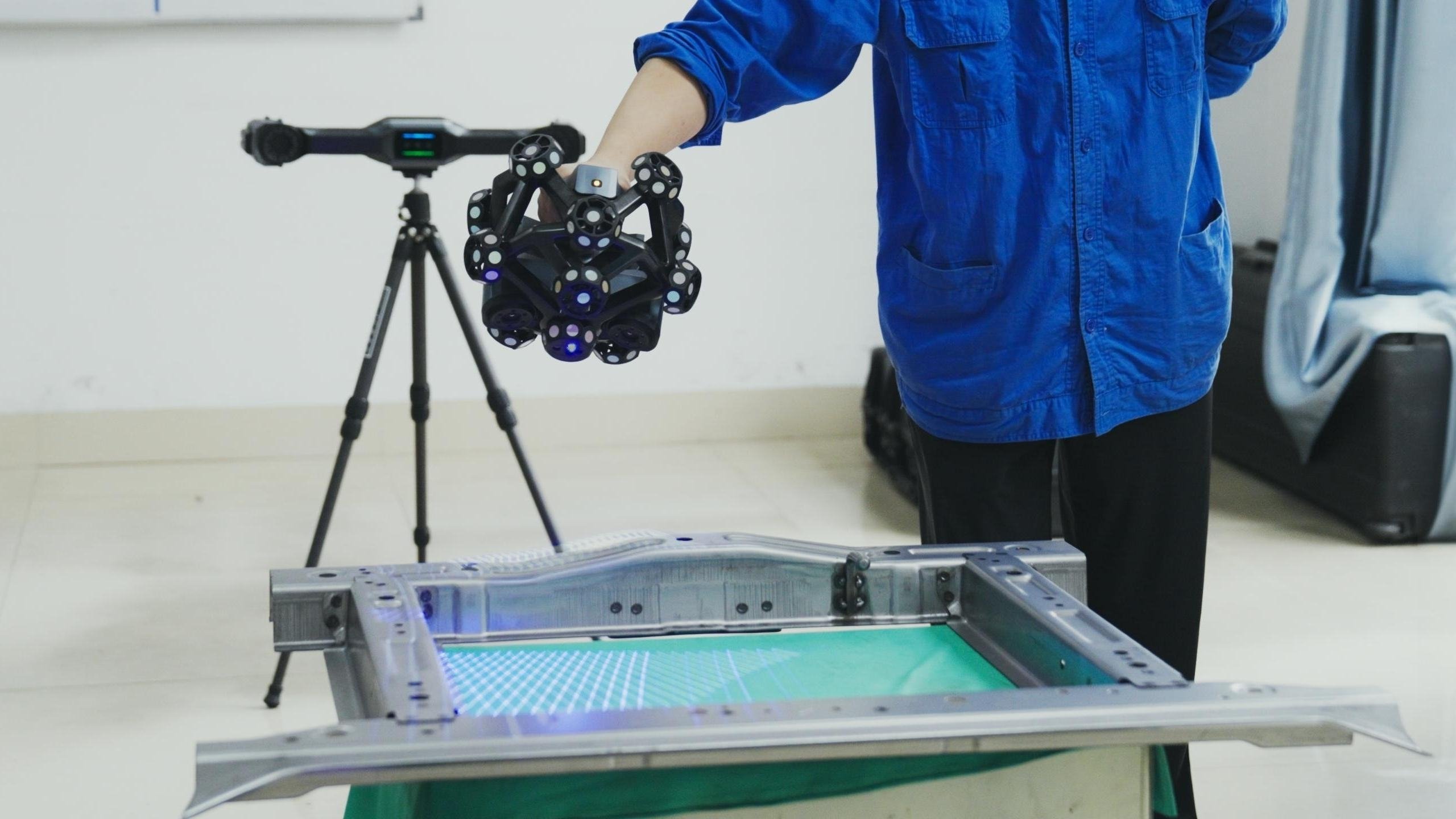
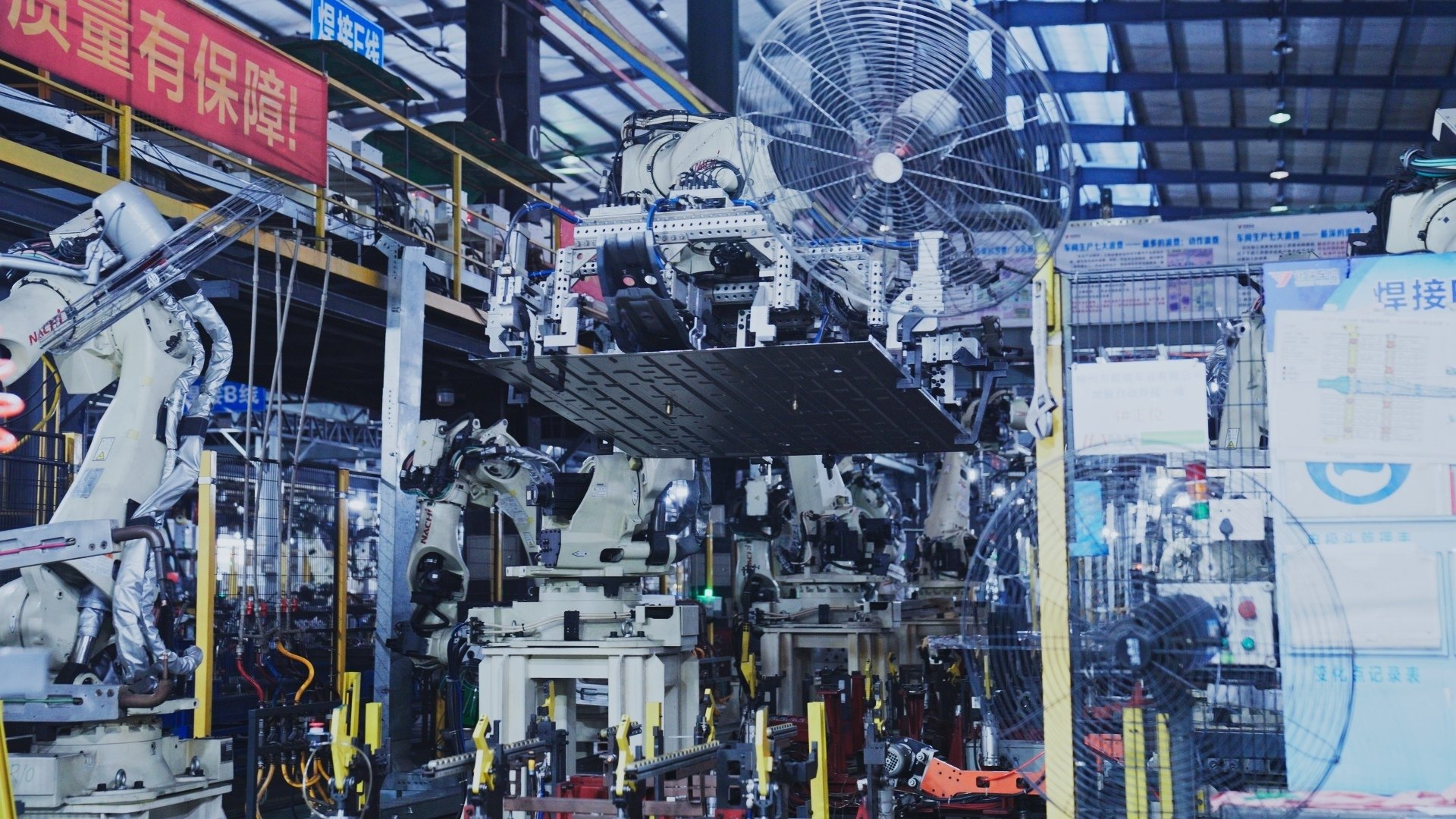
Inside Yinrui's measurement room, engineers now use the SHINING 3D FreeScan Trak Nova wireless Dynamic Tracking & Scanning System.
This scanner is designed specifically for industrial environments where precision and speed matter equally. It’s also completely wireless and lightweight. The UE Nova weighs only 1.6 kg, and the TE Nova weighs 1.3 kg. This makes it easy to move around the measurement room or even take it directly to the production line. Engineers are not tied to a fixed measuring station. They can scan parts wherever it is most convenient.
Another key feature is that the FreeScan Trak Nova does not require markers. Its built-in dynamic tracking system follows the scanner in real time, which saves even more preparation time. For stamping parts that come in all kinds of shapes and sizes, this flexibility is a game changer.
Discover the product you're looking for
- Full specifications
- Using scenarios
- Key features
- Even comes with a bundle!
FreeScan Trak Nova captures 3D data of stamping parts in real time. It generates meshes instantly — there is no separate post-processing step. That means engineers can see the results immediately and move on to the next task without waiting.
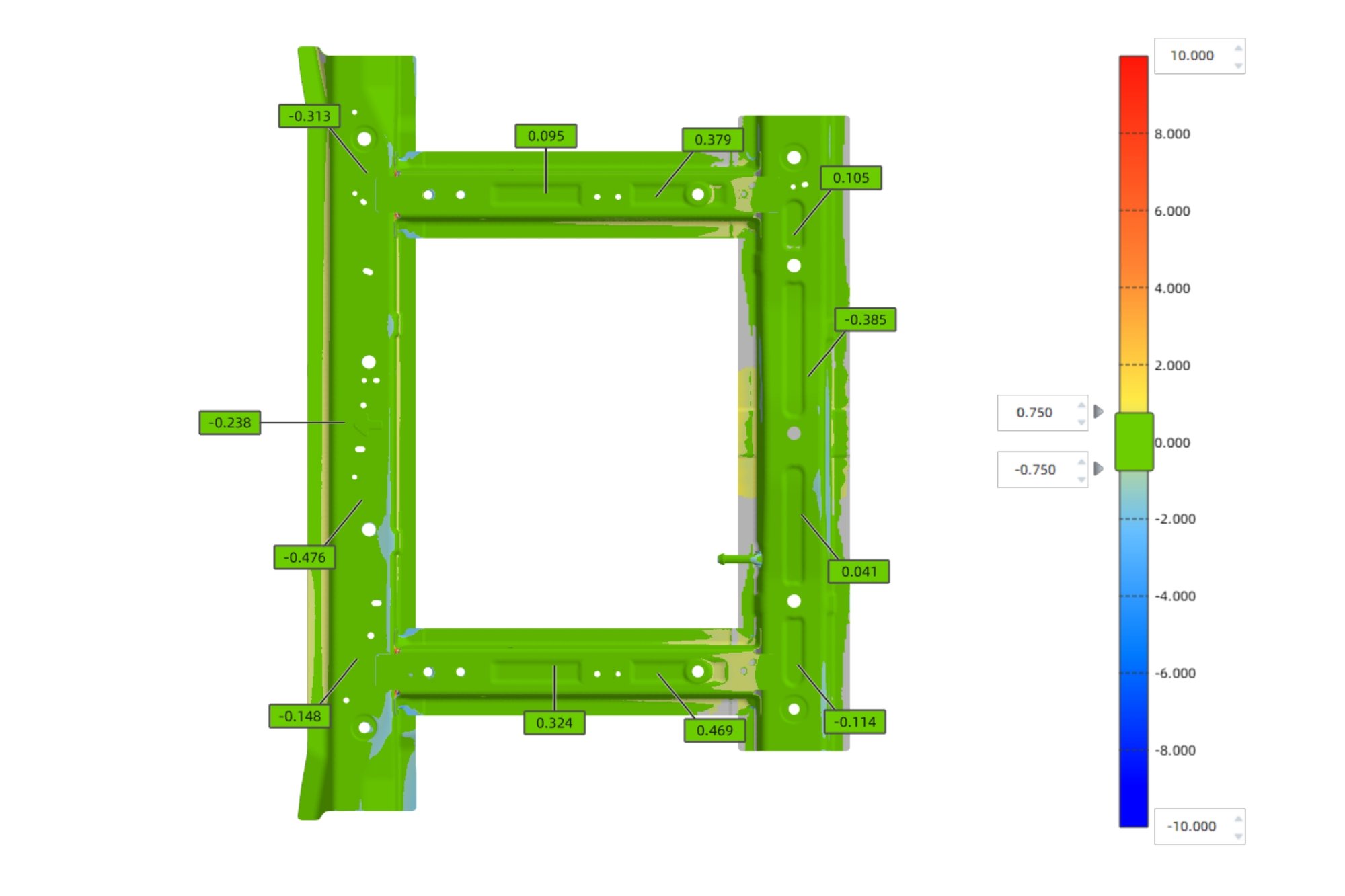
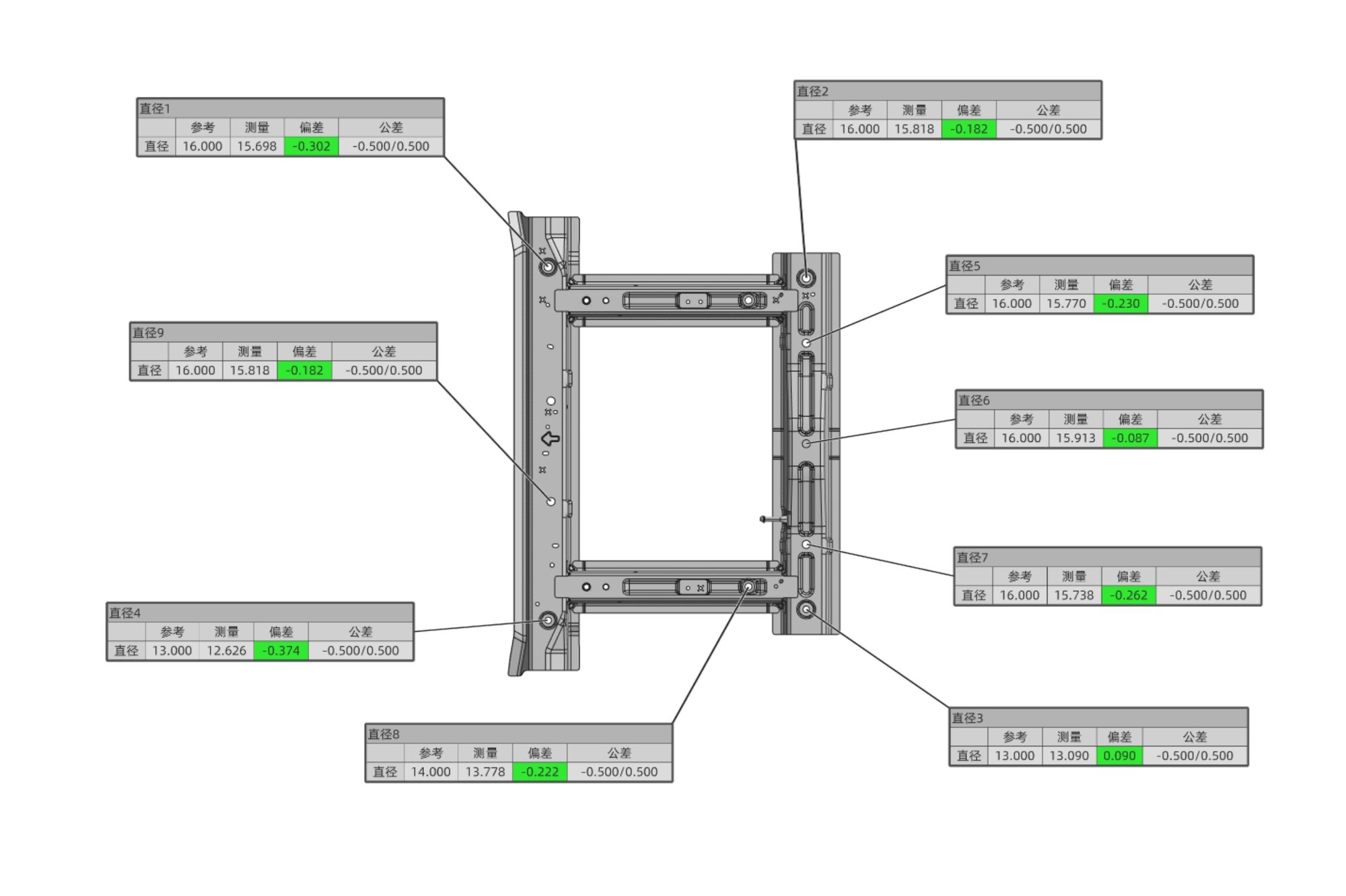
Once the scan is complete, the data is sent directly to inspection software. Engineers import the CAD model, align it with the scan data, and a color map shows deviations at a glance. All required measurements are ready in minutes. What used to take hours of manual measurement with fixtures and gauges now takes just a few minutes with a single scan.
Saving Months of Fixture Development and the Cost That Comes With It
Replacing traditional fixtures with a general-purpose 3D scanning system frees manufacturers from the lengthy fixture development process entirely. That time saving — weeks or even months per part — is a huge advantage in the race to launch new models. In fact, compared to traditional fixtures, high‑precision 3D scanning offers three clear advantages:
- Faster project timelines. A typical fixture takes 1.5 to 2 months to design and build. By eliminating this waiting period, Yinrui can start inspecting parts immediately — cutting project time by at least one-third.
- Lower costs. Custom fixtures can cost thousands of dollars per part, and complex parts may even require two separate fixtures. With a 3D scanner, the same device handles any shape, eliminating the need for new tooling on every part and delivering substantial savings over time.
- Non-contact, risk‑free measurement. Traditional fixtures often use probes or gauges that touch the part surface. For thin, easily deformed stamping parts, this contact can be risky. A non-contact scanner captures geometry without any physical pressure, keeping the part in its original condition.
Time savings, lower costs, and non‑contact measurement — these three advantages are exactly what Yinrui has experienced. As Mr. Zeng, Quality Department Head, explains:
"Compared to traditional fixtures, the biggest advantage of SHINING 3D's scanners is that they eliminate fixture development time — that cuts project time by at least a third. In the past, prototypes would be ready, but fixture development would lag behind. It just couldn't keep up. Cost is another pain point. Some parts need top-and-bottom inspection, which sometimes requires two separate fixtures. With a 3D scanner, you can scan both sides at the same time — that's a real plus."
A Smarter Path to Quality Inspection
For Yinrui, the move to high-precision 3D scanning has delivered measurable results: shorter lead times, lower costs, and a more flexible inspection process. The company no longer waits weeks for fixtures. It no longer pays thousands of dollars per part for custom tooling. And its quality team can now inspect a much wider variety of parts with the same device.
SHINING 3D will continue to focus on industrial 3D measurement, empowering more automotive manufacturers and helping the industry reach new levels of quality inspection. As more suppliers follow Yinrui's example, the entire automotive supply chain stands to benefit — from faster model launches to better quality control and lower production costs.
.png?width=2000&height=898&name=FreeScan%20Trak%20Nova%20(1).png "FreeScan Trak Nova (1)")
FreeScan Trak Nova
FreeScan Trak Nova is built to meet the diverse needs of industries requiring accurate and efficient large-scale measurements with extreme portability, productivity and versatility.
- Flexible & Separable System
- Compact & Agile Dynamic Tracking
- Wireless & Lightweight Design
- Integrated Video Photogrammetry (VPG)
Share on Social Media


