
Traffic accident investigation is increasingly relying on digital technologies to improve the accuracy, efficiency, and reliability of evidence collection.
Among these technologies, forensic 3D scanning has become a key tool for modern accident reconstruction workflows. It allows investigators to capture complete digital records of accident scenes in minutes, enabling faster insurance claims processing, accurate liability determination, and reliable digital reconstruction of accident scenes.
CASE STUDIES
Published on Aug. 26th 2025
How 3D Scanning Improves Forensic Traffic Accident Reconstruction
Discover how EinScan Libre transforms traffic accident investigation with wireless, efficient 3D scanning for faster, safer, and more accurate scene documentation.
What Is Forensic Traffic Accident Reconstruction?
Forensic traffic accident reconstruction is the process of using scientific methods to analyze and digitally rebuild road accident scenes for legal and investigative purposes.
It is commonly used by:
-
Police investigators
-
Accident reconstruction specialists
-
Insurance investigators
-
Legal professionals
The goal is to understand how and why an accident occurred using measurable and verifiable data.
How 3D Scanning Is Used in Accident Investigation
Traditional accident scene documentation relies on manual measurements, sketches, and photography. These methods can be time-consuming and may miss critical spatial details.
With 3D scanning, investigators can digitally capture the entire scene with high spatial accuracy.
A modern forensic workflow typically includes:
1. Scene Capture
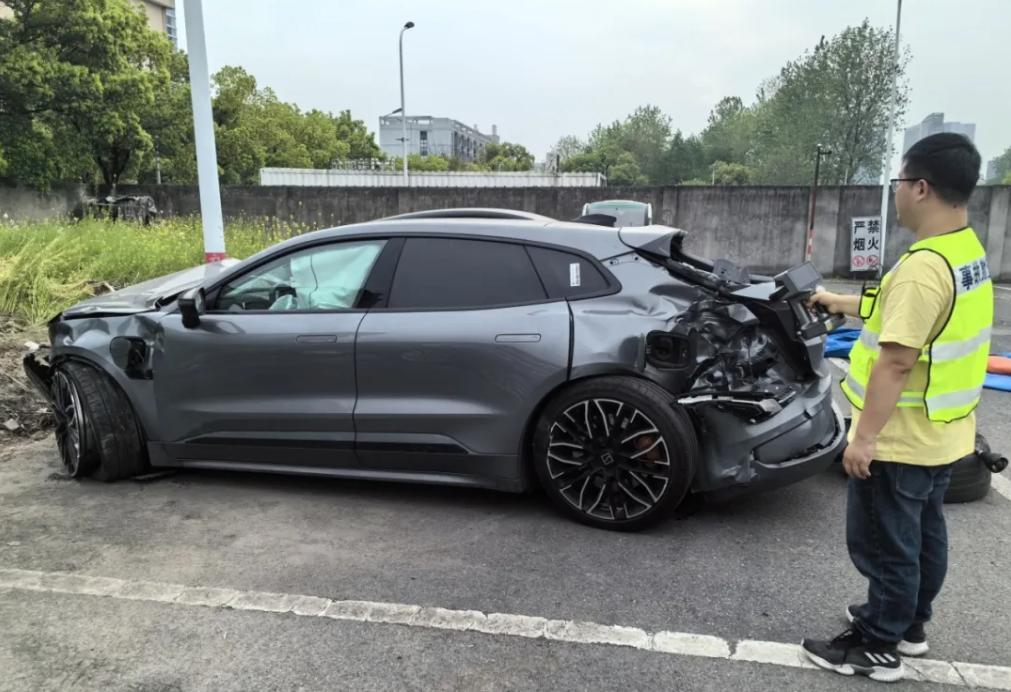
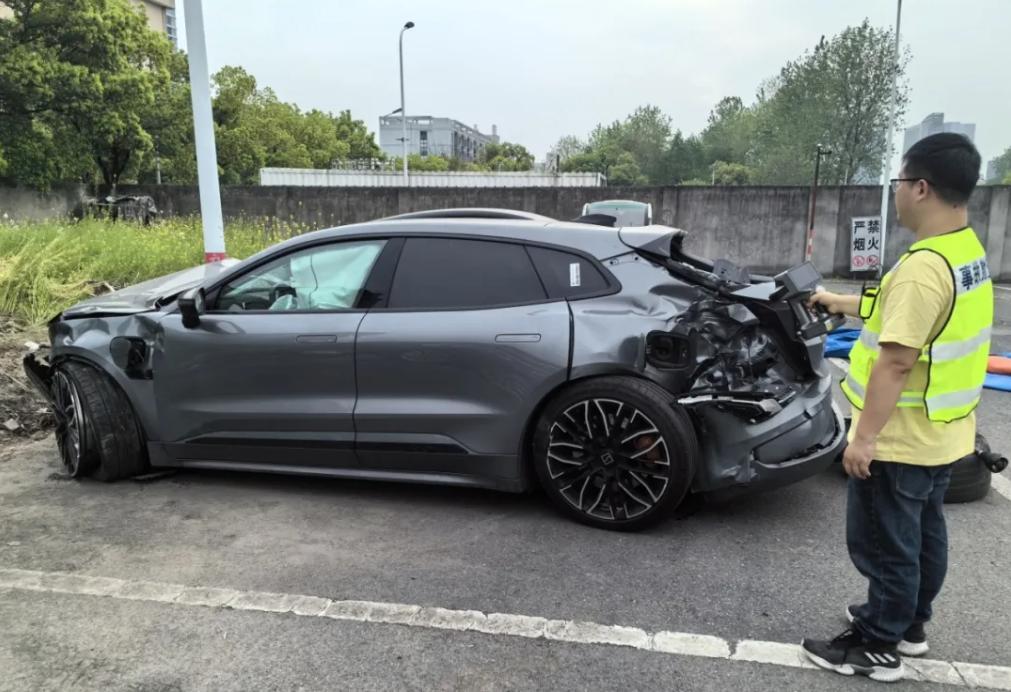
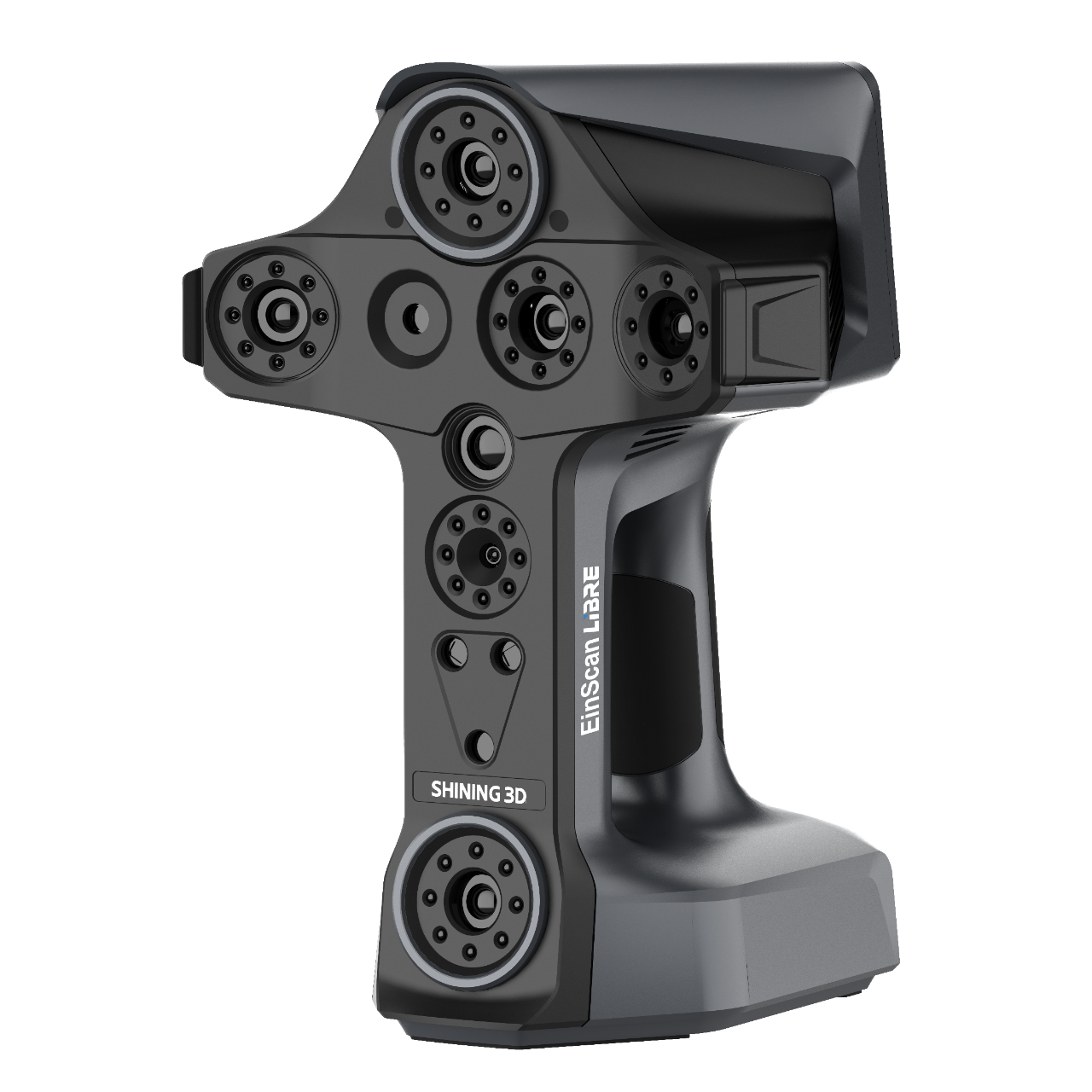
A handheld 3D scanner such as EinScan Libre is used to scan vehicles, road surfaces, and surrounding objects.
2. Data Processing
The scanned data is converted into a complete 3D model of the accident scene.
3. Digital Reconstruction
Investigators analyze vehicle positions, impact points, and spatial relationships.
4. Reporting & Visualization
The final model is used for reports, insurance documentation, and courtroom presentations.
This improves both accuracy and reproducibility compared to traditional sketch-based methods.

Capturing collision damage with EinScan Libre
Why 3D Scanning Improves Accident Investigation
3D scanning provides several key advantages in forensic investigations:
✔ Complete Scene Preservation: Every detail of the accident scene is digitally preserved, even after physical cleanup.
✔ Faster Documentation: Large scenes can be captured in minutes instead of hours.
✔ Higher Accuracy: Digital measurements reduce human error in manual documentation.
✔ Better Communication in Court: 3D visualizations help judges and juries understand accident dynamics more clearly.
Discover the product you're looking for
- Full specifications
- Using scenarios
- Key features
- Even comes with a bundle!
Why Wireless 3D Scanners Matter in Field Investigation
In real-world accident scenes, conditions are often unpredictable and time-sensitive. Wireless scanning systems provide:
-
-
Greater mobility in complex environments
-
Reduced setup time
-
Fewer physical constraints on investigators
-
Faster decision-making at the scene
-
This makes devices like EinScan Libre particularly suitable for field-based forensic work.
From Data Collection to Data-Driven Investigation
With 3D scanning, investigators gain far more than a static record—the output is an interactive, analyzable digital asset. This shift enables accident analysis to move from experience-based judgments to data-driven conclusions.
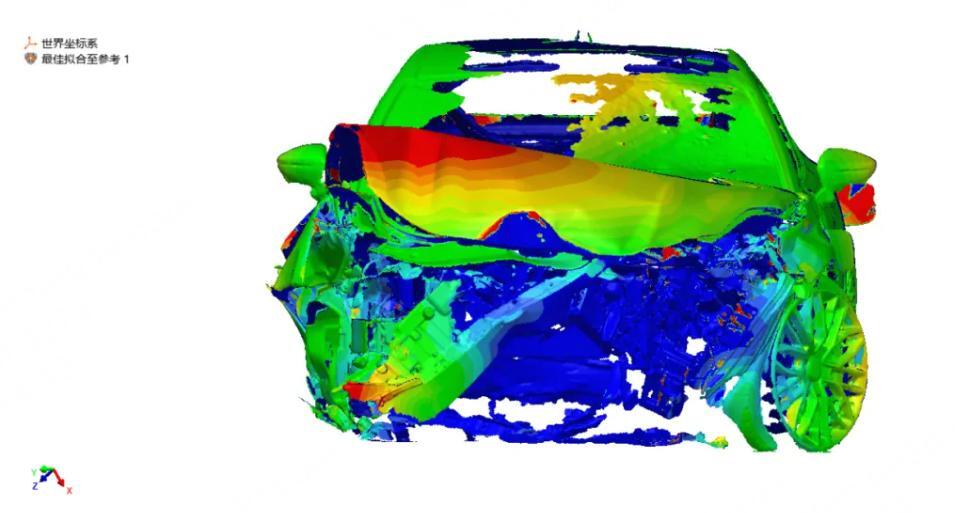
Deformation comparison
Damaged vehicle scans can be directly compared with CAD data or undamaged models. Using color-mapped deviation analysis, investigators can clearly see the depth and direction of deformation. In rear-end collisions, for example, the extent of bumper collapse can be correlated with crumple zone compression to estimate impact speed differences.

Deformation comparison
Evidence chain integration
3D models can be synchronized with CCTV footage, dashcam recordings, and Event Data Recorder (EDR) outputs. By spatially linking vehicle positions, skid marks, and debris fields, investigators create a comprehensive “3D evidence chain” that validates statements and supports reporting, insurance claims, and forensic proceedings.
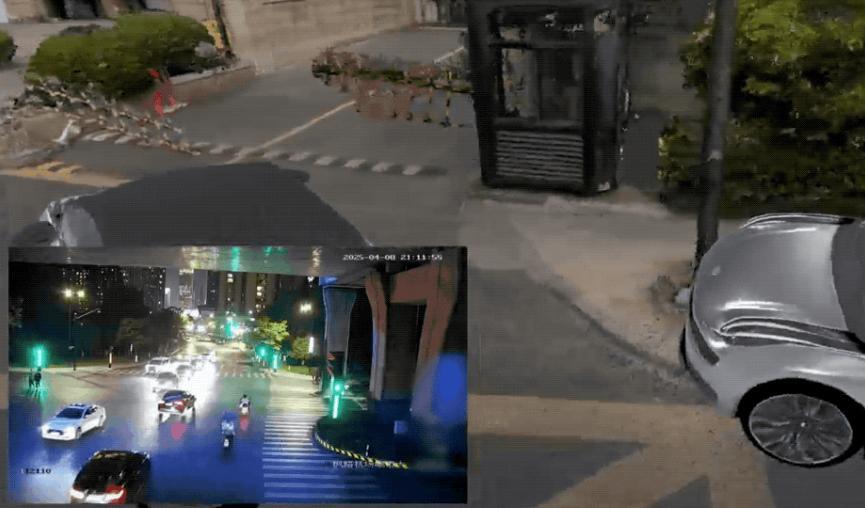
Evidence chain integration
Benefits: Redefining Accident Investigation
EinScan Libre transforms traffic accident handling from manual, paper-based methods into a fully digital, data-driven process.
- Faster scene clearance – A rapid “scan-to-upload” workflow minimizes road closures and reduces secondary accident risks.
- Smarter use of resources – A single investigator can do the work that once required a full team.
- Trustworthy evidence – Tamper-proof 3D records are admissible in court and enhance transparency.
- Lasting impact – The growing database of crash data supports safety research and guides vehicle design improvements.
By combining wireless mobility, efficiency, and intuitive operation, EinScan Libre empowers investigators to work faster, safer, and with greater confidence at the scene. As transportation systems evolve, 3D scanning is becoming an indispensable ally, enabling accurate investigations today and helping build safer roads for tomorrow.

EinScan Libre
The EinScan Libre delivers a fully wireless, standalone 3D scanning experience, powered by its built-in screen and NVIDIA processor. It offers the perfect balance of freedom and efficiency, ensuring reliable results with versatile, user-friendly operation.
- Wireless and Standalone
- Complet On-Device Scan to Mesh
- Marker-Free Laser Scan with Texture
- Embedded Powerful Computing by NVIDIA
Frequently Asked Questions
-
What is forensic 3D scanning used for in traffic accidents?
It is used to digitally capture accident scenes for reconstruction, measurement, and legal analysis.
-
How does 3D scanning help insurance claims?
It provides accurate scene data that reduces disputes and speeds up claim processing.
-
Is traffic accident investigation considered forensic science?
Yes, when it is used for legal, insurance, or court-related purposes, it falls under forensic science.
-
Can 3D scan data be used in court?
Yes. 3D models are often used as visual evidence to support legal cases.