
Skip to content
shining 3d homepage logo
ๅ›พ็‰‡1-Mar-23-2026-01-36-45-4775-AM

CASE STUDIES

Published on Sept. 21st 2023

Scanning Small Thin-Walled Mesh Structures: OptimScan Series Efficiently Captures Complete 3D Data of an Artificial Heart Valve

See how the OptimScan Series high-precision 3D scanning system captures complete, detailed data of an artificial heart valve's complex thin-walled mesh structureโ€”supporting medical device design optimization and simulation training.

An artificial heart valve is a cardiac implantable interventional medical device used to treat heart valve defects or diseases that cause degeneration. When a patient's own valve fails to open and close properly due to disease or aging, an artificial valve is surgically implanted to restore normal cardiac hemodynamics.


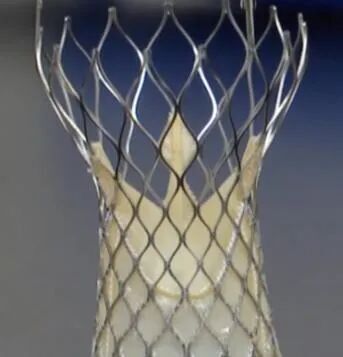
The basic structure of an artificial heart valve consists of three parts: the metal valve frame, the occluder, and the sewing ring. Among these, the metal valve frame serves as the supporting framework of the entire valve and is typically made of stainless steel, titanium, cobalt-nickel alloy, or other super-hard metals. It must possess excellent biocompatibility, fatigue resistance, and mechanical properties.
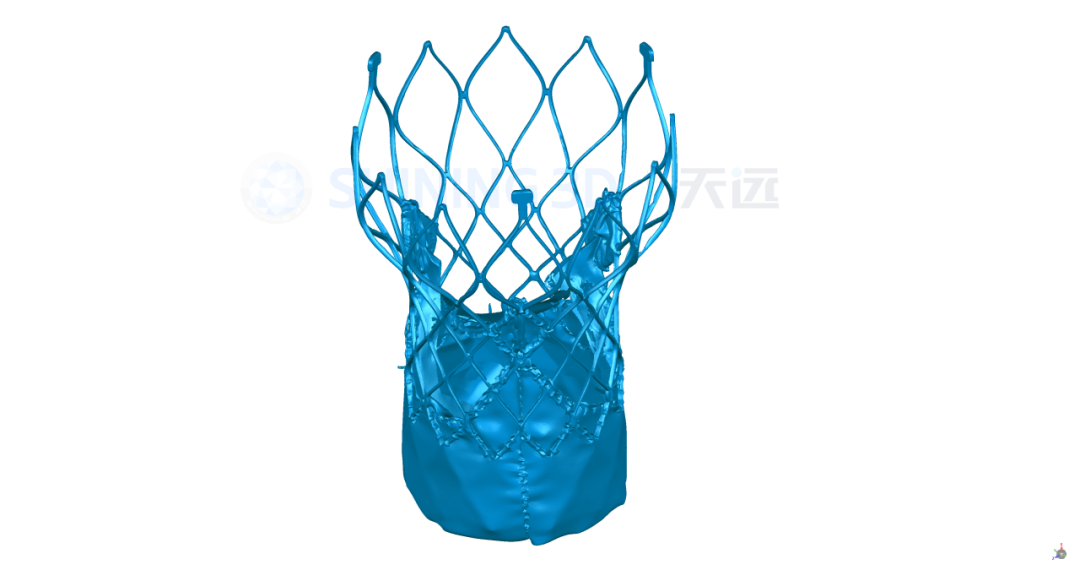
Artificial Heart Valve

Artificial Heart Valve

Obtaining high-precision 3D data of the metal valve frame is of great significance for medical device R&D, quality control, and clinical applications:


  • Product Optimization Design: By accurately restoring the valve frame structure in 3D, R&D personnel can analyze geometric features, surface transitions, mesh distribution, and other details. Combined with fluid simulation analysis, this helps optimize valve opening and closing performance, improving product durability and hemodynamic performance.
  • Quality Inspection and Process Validation: As a Class III medical device implanted in the human body, artificial heart valves are subject to extremely stringent requirements for dimensional accuracy and structural integrity. High-precision 3D Inspection System enables full-size inspection of critical dimensions, mesh consistency, surface quality, and more, ensuring that every batch meets design specifications and regulatory requirements.
  • Simulation Training and Surgical Planning: Complete 3D data can be used to create realistic anatomical models, enabling medical students and young physicians to understand valve structure and conduct effective surgical simulation training. For complex cases, surgeons can also use 3D models for preoperative planning, improving surgical precision and safety.
download brochure

Discover the product you're looking for

- Full specifications
- Using scenarios
- Key features
- Even comes with a bundle!

The Challenges during Scanning

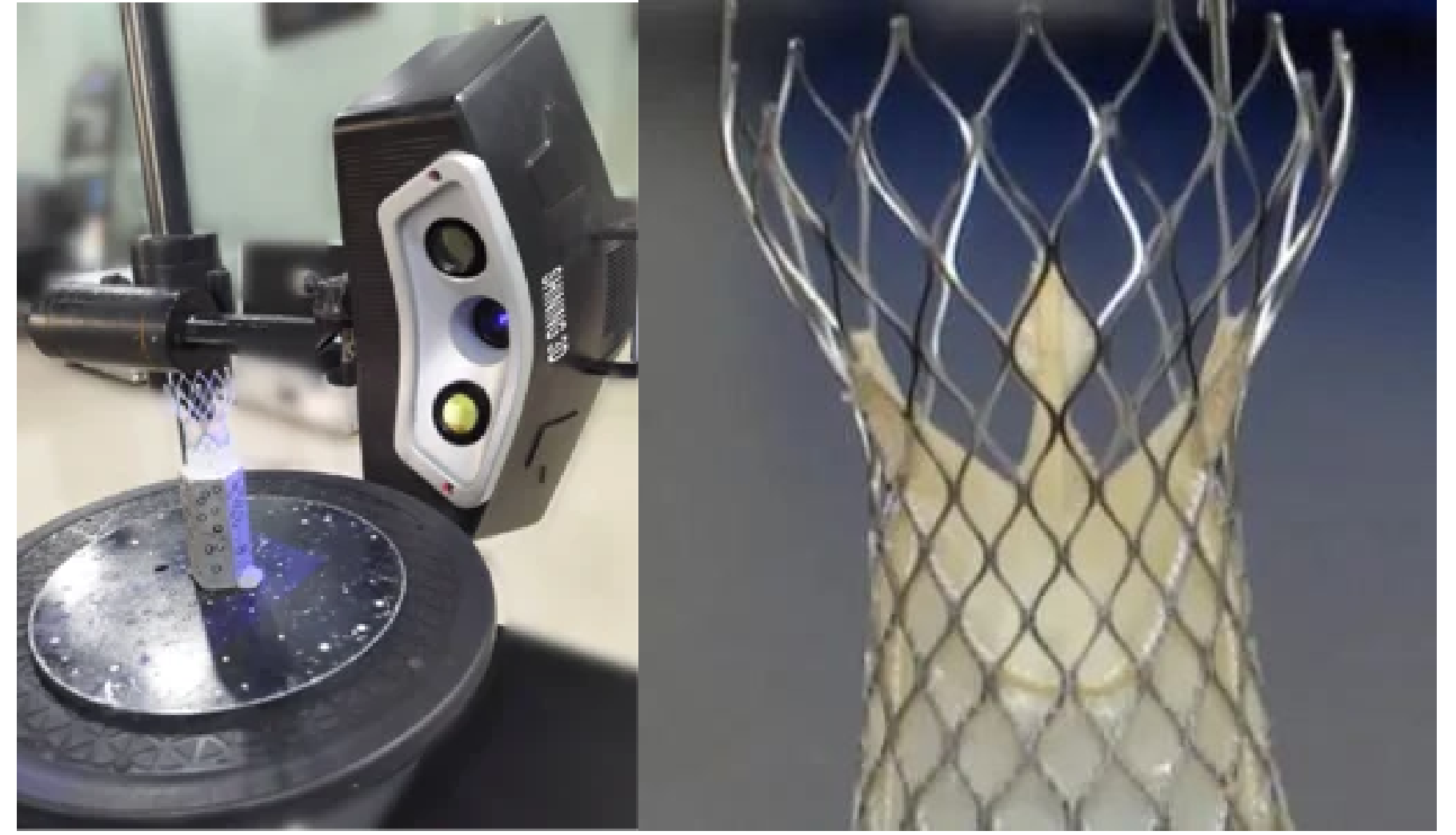
Capturing complete 3D data of a metal valve frame is not an easy task. The frame has a thin, mesh-like structure made up of fine struts and gaps. The thinnest parts are only about 0.38 mm thick, making it hard for traditional tools to measure properly. The valve itself is also very small, usually between 10 and 30 mm in size.


This means the scanning equipment needs extremely high resolution to capture all the fine details. On top of that, the metal surface is shiny and reflective, which can cause glare and lead to missing data during scanning. A system with strong anti-glare capabilities is essential to get clean, complete data. 

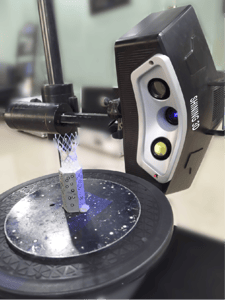
scanning image
data2
data3
data1

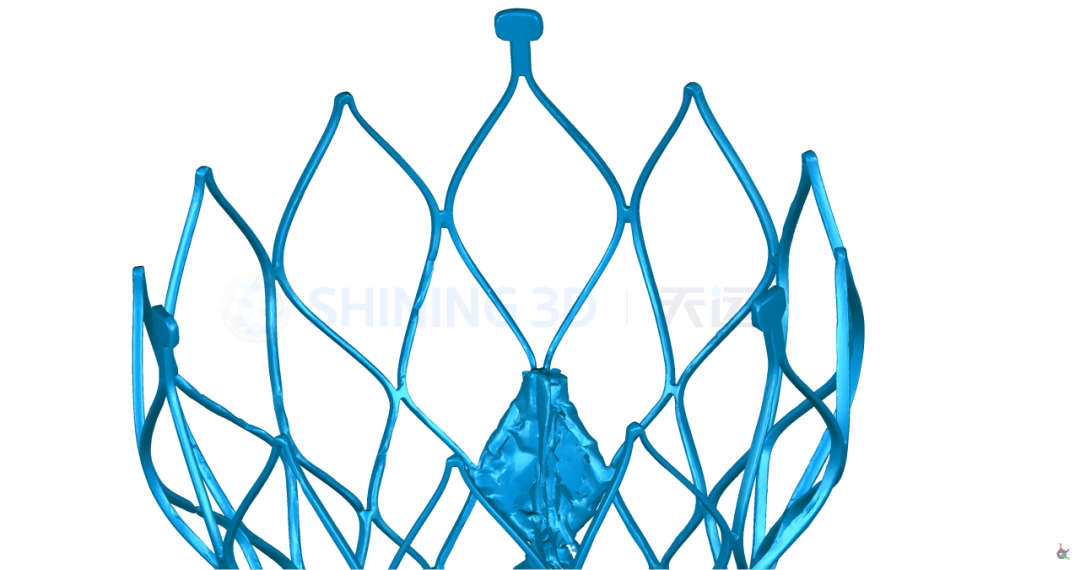
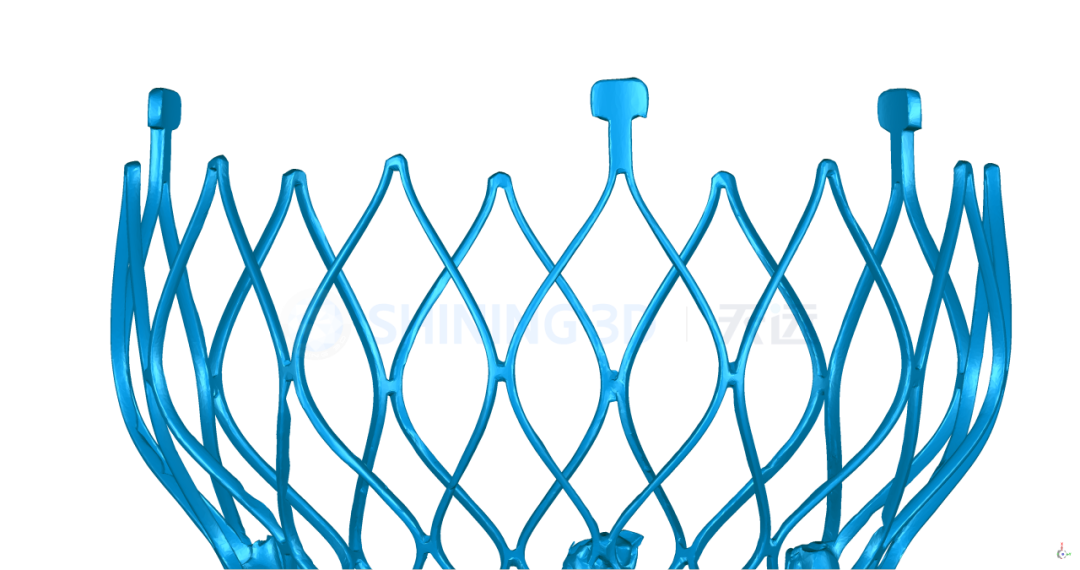
 Scanning process and scan data 

How did the OptimScan Series accomplish this difficult scanning task?

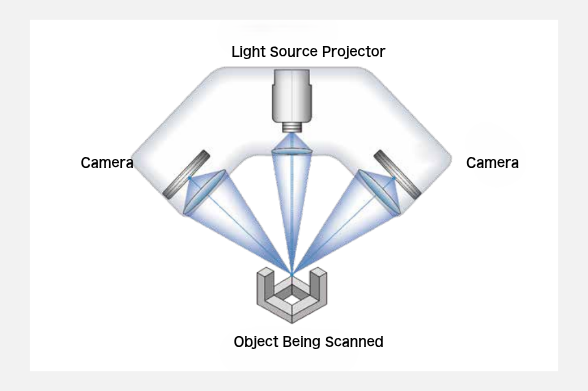
First, its powerful hardware configuration plays a key role. As is well known, the principle of 3D scanning involves the device's projector projecting structured light patterns onto the object. These patterns become distorted on the object's surface and are reflected. The cameras on both sides simultaneously capture the reflected information, and finally, the software computes the 3D data model.

IMAGE

In terms of hardware configuration, the OptimScan Series utilizes a high-performance DLP projector and employs a narrow-band blue light source. During image acquisition, this effectively filters out interference from ambient light, ensuring high-quality scan data. Additionally, the system is equipped with high-resolution 9-megapixel cameras capable of capturing extremely fine details.

Beyond the robust hardware, the OptimScan Series runs on a proprietary 3D reconstruction algorithm independently developed by the SHINING 3D R&D team, built on over 20 years of industry experience.

Combining excellent hardware and software, OptimScan Series delivers high-precision 3D data (with maximum accuracy up to 0.005 mm) and possesses exceptional detail reproduction capabilities. It has been applied in the 3D measurement of numerous precision workpieces.

Moving forward, OptimScan Series will continue to serve specialized fields such as civil aviation, 3C electronics, and medical devices, promoting cost reduction and efficiency improvement in precision manufacturing.

OptimScan Q12 (6)

OptimScan Series

The OptimScan Series delivers high-precision industrial 3D inspection through advanced blue light technology, providing metrology-grade accuracy for quality control across automotive, aerospace, and manufacturing industries. 


  • Blue Light Technology
  • Multiple Exposure & HDR
  • Intelligent Software
  • Verified Accuracy