


Skip to content
shining 3d homepage logo
How to choose the right 3D scanners?

Guides/101

Published on 24th April 2026

How to Evaluate Industrial 3D Scanners in 2026: An Engineer’s Guide

Master the 2026 evaluation criteria for industrial 3D scanners. Navigate procurement challenges and prevent quality issues in your inspection workflows.

In the 2026 industrial manufacturing landscape, as automation and digital twin technologies deeply integrate, industrial 3D scanners have evolved from simple measurement tools into critical infrastructure. They are now essential for determining product lifecycle quality, building a Digital Inventory, and ensuring Operational Continuity.

However, facing a market flooded with dazzling hardware specs and closed ecosystems, quality control and metrology engineers often encounter significant challenges during the selection process. This guide will unpack the latest industrial 3D scanner evaluation criteria, analyze common manufacturer procurement challenges, and provide a practical engineer comparison checklist to help you build a stable, reliable inspection workflow in complex factory environments.

1. Core Evaluation Criteria: The DNA of 2026 Flagship Devices

When evaluating equipment, metrology engineers must look past the manufacturer's ideal laboratory data and focus on cutting-edge technical standards in real-world applications.

On-Device Inspection Capabilities

In 2026, the core dividing line between entry-level devices and flagship metrology scanners is on-device inspection capability. Top-tier industrial 3D scanners are no longer just "data collectors" but smart terminals integrated with edge computing. This forward-deployed computing power allows complex point cloud processing and initial quality assessments to be completed in real-time directly on the device, drastically reducing reliance on workstation PCs and data transmission latency.

Omni网页图包_Metrology-Grade On-Scanner Inspection


Wireless Architecture for Large, Immobile Objects

For aerospace components, heavy castings, or large molds—which are inherently large, immobile objects—the constraint of traditional cables is a major safety hazard and an efficiency bottleneck. When evaluating, "true wireless scanning capability" must be a hard requirement for these applications, ensuring engineers can safely navigate the shop floor or narrow assembly lines without blind spots.
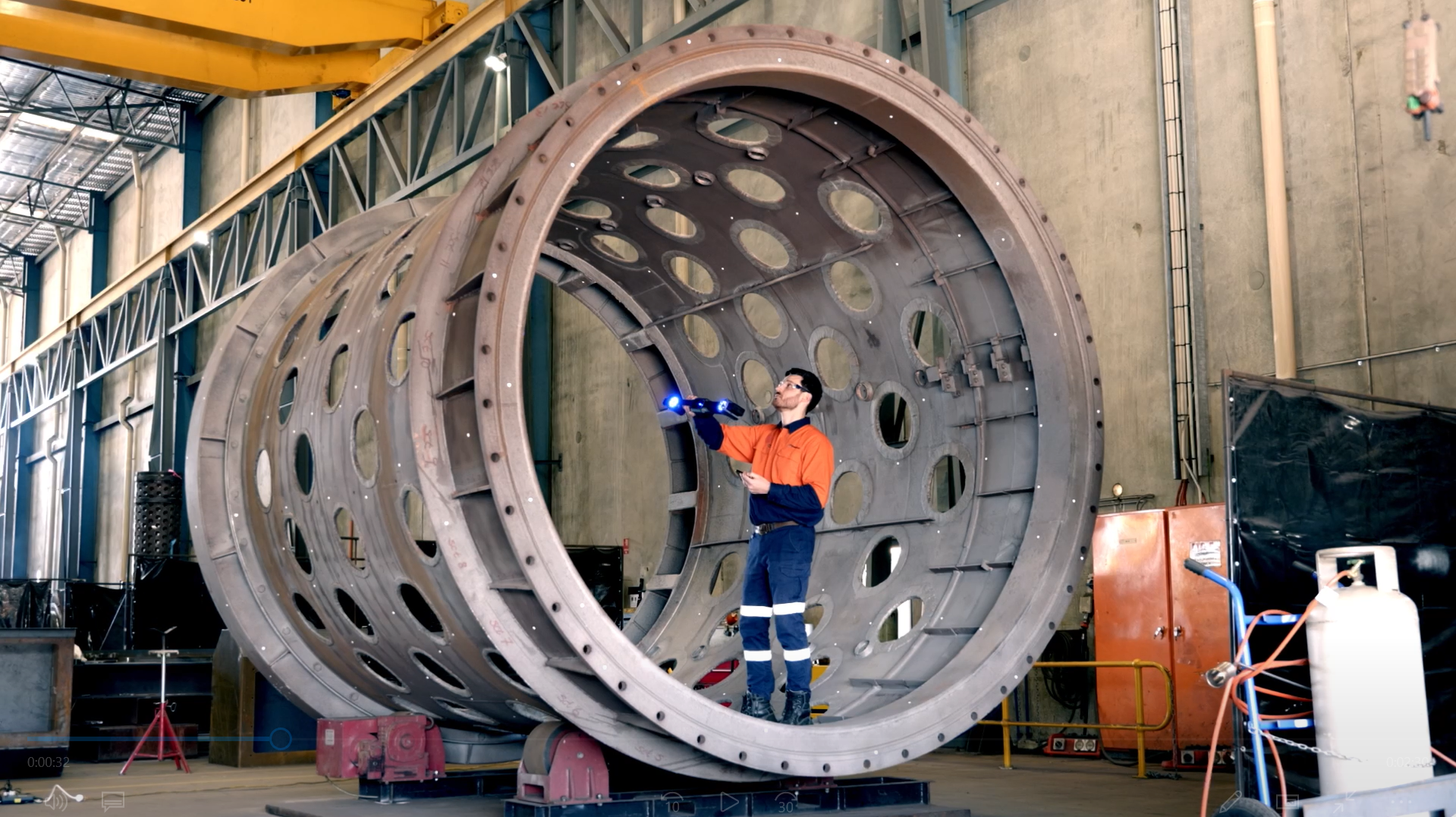
Capturing the entire trommel screen body by FreeScan UE Nova 1

Scan Accuracy and Metrology

Single-Shot vs. Volumetric Accuracy: Many manufacturers tout extremely high single-shot accuracy, but in practice, volumetric accuracy is what truly determines the overall assembly quality of large parts.

VDI/VDE 2634 Certification: Any system claiming to be "metrology-grade" must provide a third-party calibration certificate based on international standards.
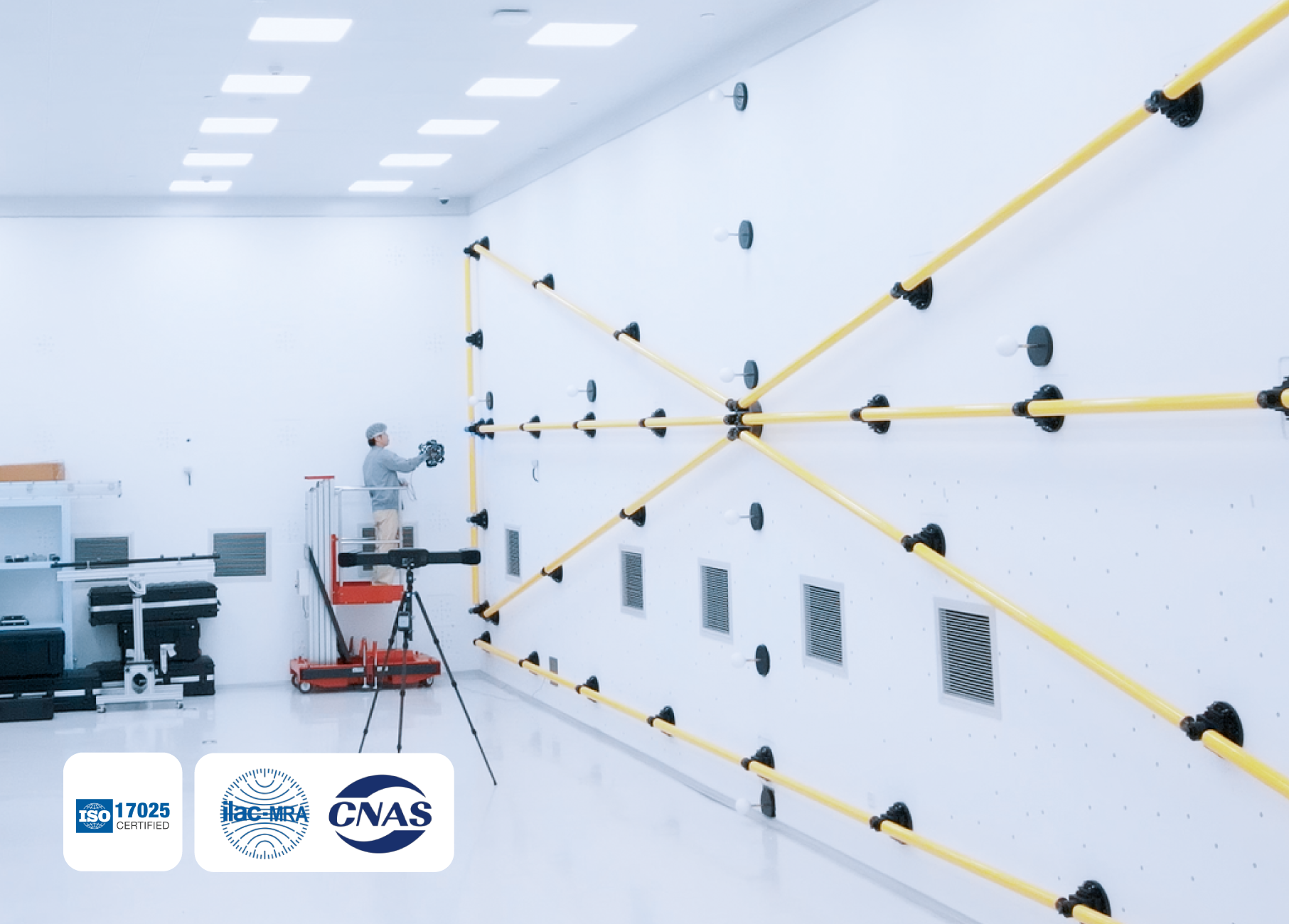
SHINING 3D Accredited Accuracy Lab-1


2. Navigating Manufacturer Procurement Challenges: Ecosystems and Scalability

During the procurement phase, technical teams often fall into the trap of hardware-centric thinking, ignoring the long-term costs of the software ecosystem.

Beware of Closed Systems and Fragmented Hardware Lines

In the past, companies often had to purchase completely separate hardware systems—and maintain multiple web portals—for different applications (e.g., high-precision metrology, large-volume scanning, reverse engineering). The pioneering procurement strategy for 2026 shifts toward modular software and product tiering.

For instance, the industry-leading Omni Series philosophy utilizes a unified underlying hardware architecture paired with highly modular software options. This allows the equipment to scale and grow alongside your enterprise's evolving inspection needs, breaking down data silos and ensuring consistency from R&D to the production line.

Ignoring the Time Cost of "Data Cleaning"

Inferior scanners generate massive amounts of noise. If engineers have to spend hours every day manually cleaning redundant point clouds in the software, the hidden labor costs of that device are staggering. Systems equipped with intelligent environmental adaptation and advanced material-handling algorithms are the only viable long-term choice.

3. Controlling Quality Issues in Factory Environments

Handheld 3D scanning in factories offers immense flexibility for inspection. However, to avoid quality deviations caused by human variables (quality issues and inspection workflows), strict on-site control strategies must be established:

  • Dynamic Referencing: Even if the workpiece shifts slightly or the shop floor vibrates during measurement, high-end systems can correct the coordinate system in real-time using positioning targets.

  • Powderless Scanning for Shiny/Black Materials: Modern multi-line blue laser technology must possess robust material adaptability, capturing high-quality point clouds directly from machined metal parts or pure black injection-molded parts without the need for scanning spray, keeping the shop floor clean.

  • Standardized Inspection Workflows: From on-site calibration and datum alignment to generating the First Article Inspection (FAI) report, the entire workflow should be intelligently guided by the software to minimize operator dependency.

An application engineer capturing the 3D data of the battery container with FreeScan Omni (1)


4. The Engineer Comparison Checklist

To translate theory into a practical decision-making tool, we have compiled this core checklist. When requesting an on-site demo, be sure to ask the supplier to perform the following tests on your factory floor

Evaluation Dimension   Engineer Verification Metric  Target Expectation / 2026 Flagship Standard 
Computing Architecture  On-device inspection validation   The device can independently complete real-time generation and preliminary processing of dense point clouds. 
Application Match  Scanning experience for large, immobile objects  Must support stable, zero-latency, high-bandwidth wireless scanning. 
Metrology Ecosystem  Modular expansion capability of software   Uses a unified platform (e.g., Omni Series architecture); rejects software fragmentation. 
Material Challenges  Scanning untreated shiny machined/pure black parts   Observe if there is severe point cloud stratification or missing surface data. 
Anti-Interference  Field test near stamping presses or heavy machinery   Enable dynamic tracking and verify that aligned features do not shift under vibration. 


Embracing the Future of 3D Metrology 

At SHINING 3D, we understand that the right investment is not just buying a measurement tool, but introducing a reliable, future-proof data capture ecosystem. By adhering to the strictest industrial 3D scanner evaluation criteria and using the checklist above to rigorously control field tests, manufacturing enterprises can effectively avoid procurement pitfalls, accelerate the creation of their proprietary Digital Inventory, and safeguard Operational Continuity in the global market.

Want to dive deeper into our flagship metrology solutions and modular ecosystem? Explore the SHINING 3D product lineup or visit the SHINING 3D Metrology Academy for systematic professional training and technical support.